
Trees
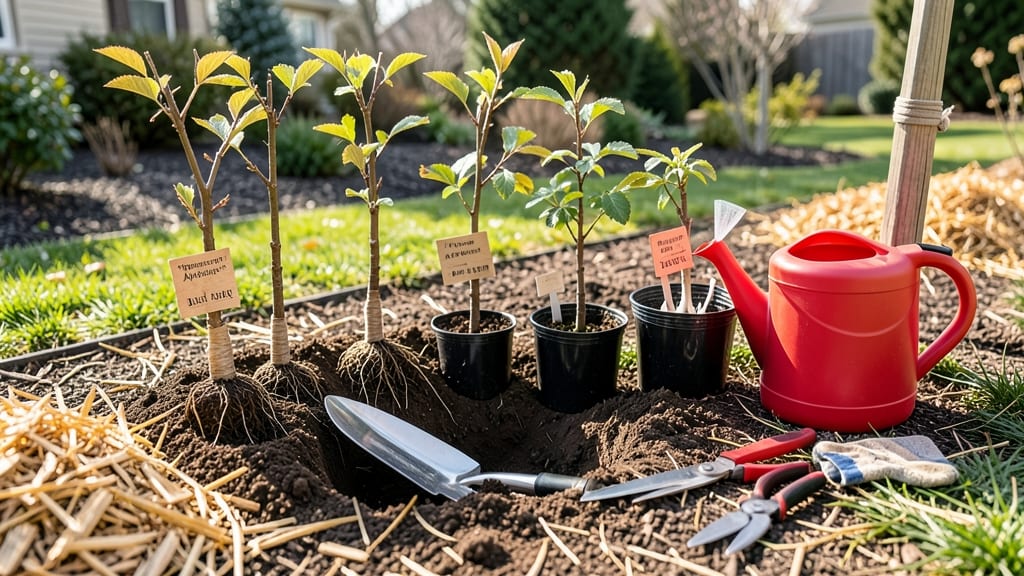
Timing your fruit tree planting in Washington isn't just about grabbing a shovel—it's the key to whether your 🍎 orchard thrives or struggles.
The state's dramatic climate shifts, from the rain-soaked Puget Sound to the dry Columbia Basin, mean that planting too early or late can spell disaster for your trees.
Most gardeners know fall is ideal for bare-root trees, but did you realize Washington's chill-hour requirements vary wildly by region? A peach tree happy in the Yakima Valley might freeze in the Skagit Valley if planted without considering these critical numbers.
I'll show you exactly how to match varieties to your specific microclimate for reliable harvests.
We'll cover both traditional fall planting and spring alternatives, including when to plant container-grown trees that give you more flexibility. You'll learn how to prepare your soil differently for stone fruits versus apples, and why some areas need to wait until after April 15 to avoid frost damage.
Whether you're dreaming of homegrown apples or cherries, this guide will help you avoid common mistakes that waste years of effort. Let's get those trees in the ground at exactly the right time for your corner of Washington.
Washington’s chill-hour zones: how to match fruit trees to your location
Washington’s climate ranges from coastal mildness in the Pacific Northwest to continental extremes in Eastern regions, making chill-hour requirements the key to selecting the right fruit trees. Chill hours—defined as temperatures between 32°F and 45°F—determine whether a tree will bloom and fruit successfully.
For example, apples need 800–1,200 chill hours, while peaches thrive with just 300–500 hours. Ignoring this can lead to poor yields or no fruit at all.
Western Washington, including the Puget Sound region, typically accumulates 600–1,000 chill hours, favoring varieties like Honeycrisp apples or Bing cherries. Meanwhile, the Yakima Valley and Columbia Basin often exceed 1,000–1,200 chill hours, perfect for Granny Smith apples or Rainier cherries.
Eastern Washington’s Paloouse area sits in a 500–700 chill-hour zone, limiting options to low-chill varieties like Sierra Gold peaches.
To find your exact chill-hour zone, use the Washington State University (WSU) Extension chill-hour calculator or check local USDA Plant Hardiness Zone maps. For instance, Seattle (Zone 8a) averages 800 chill hours, while Spokane (Zone 6b) hits 1,100+ hours.
Mismatching a tree to your zone can result in failed pollination or dormancy issues, so always verify before buying.
🌱 Washington Chill-Hour Zones & Best Fruit Tree Varieties
| Zone | Chill Hours | Best Varieties | Notes |
|---|---|---|---|
| Western WA (Puget Sound) | 600–1,000 | Honeycrisp Apple, Bing Cherry, Fuji Apple | Humid; watch for fungal diseases. |
| Eastern WA (Yakima Valley) | 1,000–1,200 | Granny Smith Apple, Rainier Cherry, Starking Delicious Apple | Hot days; needs irrigation. |
| Central WA (Paloouse) | 500–700 | Sierra Gold Peach, Redhaven Cherry, Haralson Pear | Low-chill; drought-tolerant. |
| Cascades (Snoqualmie Pass) | 1,200+ | Golden Delicious Apple, Lambert Cherry, Starkrimson Apple | Cooler; longer growing season. |
For stone fruits like peaches and plums, low-chill varieties are essential in Zone 6 or lower. For example, Sierra Gold peaches require only 300–400 chill hours, making them ideal for Eastern Washington’s inland areas.
Meanwhile, apples and pears need 800+ chill hours, so they’re better suited for Western WA or higher elevations. Always cross-reference with WSU Extension’s variety trials for localized success.
Another critical factor is spring frost timing. Eastern Washington often experiences late spring frosts (after March 15), which can damage blossoms. To mitigate this, plant late-blooming varieties like Starkrimson apples or use frost cloth during critical bloom periods.
In contrast, Western WA’s cooler, wetter climate delays frost risks until late April or May, giving more flexibility for early-blooming trees.
If you’re unsure about your chill hours, consider microclimates within your property. A south-facing slope may accumulate 100–200 more chill hours than a north-facing valley. Use a home weather station or consult local orchardists for precise data.
For instance, Wenatchee’s Quincy often sees 1,100+ chill hours, while nearby Leavenworth might drop to 900 hours due to elevation.
For container-grown trees, chill-hour requirements remain the same, but root zone insulation (like mulch or burlap wraps) can help protect roots in warmer microclimates.
If you’re in a low-chill zone (e.g., Spokane Valley), opt for dwarf varieties like Columnar apples or Patio peaches, which adapt better to limited space and chill hours.
Finally, pollination compatibility ties into chill hours. Many fruit trees require cross-pollination from another variety. For example, Honeycrisp apples need a pollinator like Granny Smith planted within 50 feet. Always check WSU’s pollination guides to ensure your orchard setup aligns with both chill-hour zones and flowering times.
By matching your fruit trees to Washington’s chill-hour zones, you’ll maximize yields and minimize frustration. Start with your local WSU Extension office or use online tools like the Chill Hour Calculator to make informed choices.
With the right variety in the right place, your Washington orchard can thrive year after year. 🍎🌳
Best planting months for Washington fruit trees by variety
Washington’s diverse climate means your planting timeline depends on both fruit tree type and microclimate. While bare-root trees thrive when planted in late winter or early spring (February–April), container-grown trees offer more flexibility.
Let’s break down the best months for each variety, accounting for frost risks and chill-hour needs.
For apples and pears, aim for late winter dormancy (February–March) in Western Washington, where milder winters reduce frost damage.
In Eastern Washington’s colder zones, plant in early spring (April) after the last frost date. Stone fruits like peaches and plums need even more precision—plant them in late winter (February) to avoid early spring frosts that can kill blossoms.
🌱
📅 Planting Timeline by Variety
📍 Western WA: Feb–Mar
📍 Eastern WA: Apr (after frost)
📍 All Regions: Late Feb–Mar
⚠️ Avoid late planting
📍 Western WA: Feb
📍 Eastern WA: Mar–Apr
📍 All Regions: Sep–Oct
✅ Best for drought-prone areas
📍 Year-Round (except winter)
⚠️ Avoid extreme heat/cold
In Western Washington, where winters are wetter and milder, you can push planting slightly earlier (e.g., February for apples). But in Eastern Washington, where late frosts linger until April 15 in many areas, delay planting until after the last frost date.
Use the Washington State University Extension’s frost map to pinpoint your local risk zone.
For fall planting (September–October), focus on bare-root trees in well-draining soil. This method works best in drought-prone areas like the Columbia Basin, where winter rains are scarce. Just ensure the ground isn’t frozen—October is ideal for most regions.
🌿
Pro tip: If you’re unsure about frost dates, opt for container-grown trees. They adapt better to delayed planting and can be moved to protect from unexpected cold snaps. Just remember—soil temperature (not air temperature) determines root growth. Aim for 40°F+ soil before planting.