
Trees
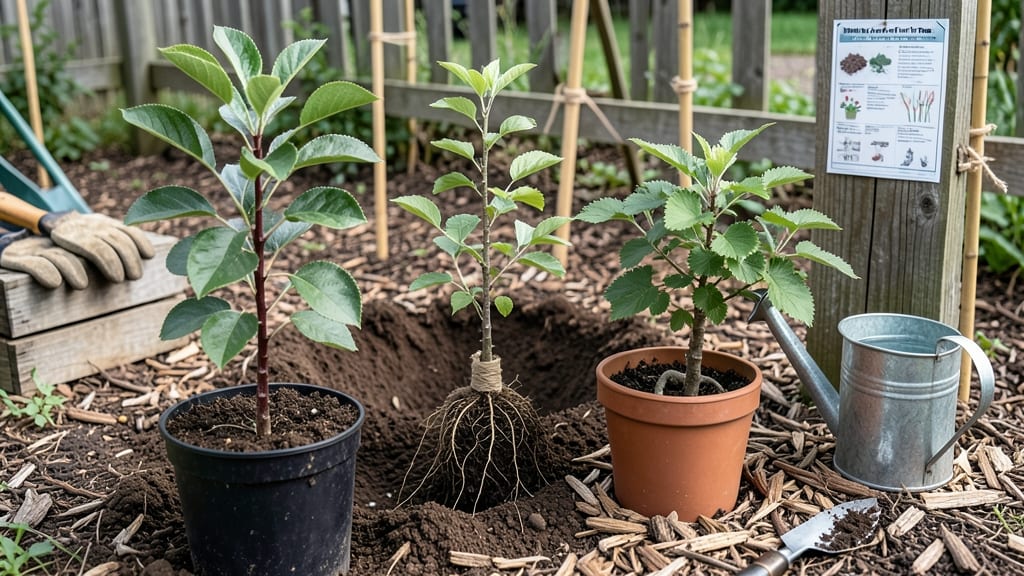
Timing your fruit tree planting in Washington State isn't just about the calendar—it's about matching your orchard's future harvest to the chill hours your region actually delivers.
Whether you're in the rainy Pacific Northwest or the sunbaked Columbia Basin, planting too early or too late can mean the difference between a thriving orchard and a sad, frost-bitten sapling.
I've seen firsthand how Washington's microclimates create wildly different growing conditions just miles apart. What works perfectly for a cherry tree in the Skagit Valley might fail miserably if planted in the Yakima Valley's hotter, drier air.
The key is understanding your specific chill-hour zone and when your local soil finally warms up enough to support new roots.
In this guide, I'll walk you through exactly when to plant common fruit trees like apples, peaches, and pears across Washington's diverse zones. We'll cover soil prep secrets, frost timing, and even how to work with Washington State University Extension's data to pick the perfect varieties for your backyard.
Ready to turn your fruit tree dreams into a bountiful harvest? Let's get started with the planting schedule that actually works for Washington's climate quirks.
Washington State fruit tree planting zones by chill hours: matching varieties to your region
Washington State’s climate varies dramatically from the rain-soaked west to the dry east, creating distinct chill-hour zones that determine which fruit trees thrive. Chill hours (accumulated temps between 32°F–45°F) are critical—apples need 500–1,000 hours, while peaches thrive with 200–400 hours.
The Cascade Mountains act as a divider, with the west getting 600–1,200+ chill hours and the east as few as 200–500 hours.
In the Western WA (e.g., Seattle, Bellingham), high-chill varieties like Granny Smith apples or Bing cherries excel. Meanwhile, the Eastern WA (e.g., Yakima, Wenatchee) favors low-chill varieties such as Honeycrisp apples or Lapins cherries.
Urban areas like Spokane or Tacoma may have microclimates with 100–200 fewer chill hours than official records.
Here’s how to match fruit trees to your chill-hour zone:
| Chill-Hour Zone | Regions in WA | Best Fruit Trees | Notes |
|---|---|---|---|
| 200–400 | Yakima Valley, Wenatchee, Moses Lake | Peaches, Nectarines, Low-Chill Apples (e.g., Honeycrisp) | Avoid high-chill varieties like Fuji apples. |
| 400–600 | Spokane, Tri-Cities, Pullman | Cherries (Lapins), Pears, Semi-Dwarf Apples | Use dwarf rootstocks for smaller spaces. |
| 600–800 | Olympia, Tacoma, Everett | Apples (Granny Smith), Pears, Plums | Watch for late frosts in valleys. |
| 800–1,200+ | Seattle, Bellingham, Mount Vernon | Cherries (Bing), High-Chill Apples (Fuji) | Urban areas may need windbreaks. |
For urban gardeners, consider container-grown trees like columnar apples or dwarf peaches, which adapt to microclimates. Always check WSU Extension’s chill-hour maps for your exact location, as local topography can shift chill hours by 100–300 hours.
Soil type also plays a role: Western WA’s acidic soils suit blueberries, while Eastern WA’s alkaline soils favor peaches. Amend soil with compost or lime to match your tree’s needs before planting.
If you’re in a transition zone (e.g., 400–600 chill hours), opt for semi-dwarf varieties like Crimson Crisp apples, which tolerate wider chill ranges. These trees also recover better from late frosts, common in Skagit Valley or Puyallup.
Pro tip: Plant two compatible varieties for cross-pollination (e.g., Bing cherries + Stella cherries). This ensures better fruit set and harvests, even in low-chill zones.
For eastern WA growers, focus on early-season varieties like Suncrest nectarines, which ripen before heat stress sets in. In the west, prioritize late-season apples like Cox’s Orange Pippin to avoid fall rains spoiling harvests.
Always plant bare-root trees in late fall or early spring (November–March) to align with dormant periods. This gives roots time to establish before active growth begins.
🌱
Best planting months for Washington fruit trees: soil prep, rainfall, and frost risks
Washington State’s planting window for fruit trees hinges on two critical factors: soil temperature and frost risk. Unlike many states, Washington’s fall and early spring both offer viable planting opportunities—but the best choice depends on your specific region.
In the Skagit Valley, for example, fall planting lets trees establish roots before winter rains, while in the Yakima Valley, early spring planting avoids late frosts that can damage tender new growth.
For most of Washington, October through November is ideal for dormant planting (when trees are in winter rest). This timing lets roots establish before winter rains arrive, reducing transplant shock.
However, if you’re in Zone 7 or warmer areas (like the Columbia Basin), early spring planting (February to early March) works better to avoid winter soil saturation.
Soil temperature is your secret weapon. Fruit tree roots need soil at 45°F (7°C) or warmer to grow actively. Use a soil thermometer to check—if it’s colder, wait. In Western Washington, this usually means waiting until late March or April, while Eastern Washington can plant earlier due to warmer soils.
Here’s the golden rule: Never plant when late frosts are predicted. The Skagit Valley often sees frosts into May, while the Wenatchee area typically clears by April. Check the WSU AgWeatherNet for your local frost forecasts.
Rainfall also plays a role. In Western Washington’s wet winters, fall planting risks waterlogged soil. Amend your planting hole with compost and sand to improve drainage. Meanwhile, Eastern Washington’s dry springs benefit from early planting to tap into winter moisture reserves.
Pro tip: If you’re grafting your fruit tree, plant in late winter (February) to give the graft union time to heal before bud break. For bare-root trees, fall is best—just avoid planting when the ground is frozen.
Timing isn’t just about the calendar—it’s about reading your local microclimate. Observe your garden’s frost patterns for a few years, and you’ll nail the perfect planting window for juicy, homegrown fruit every season. 🌱
🌿 Washington Fruit Tree Planting Timeline
- 📅 October-November: Best for dormant planting in most regions. Soil cools, reducing transplant shock.
- 📅 February-March: Ideal for Zone 7+ areas (e.g., Yakima Valley) to avoid winter saturation.
- 🌡️ Soil Temp Check: Wait until 45°F (7°C)—use a thermometer! Western WA often waits until April.
- ❄️ Frost Alert: Avoid planting 2 weeks before your area’s last frost date (check WSU AgWeatherNet).
- 💧 Rainfall Tip: Amend soil with compost + sand in wet climates (e.g., Skagit Valley).
- 🌱 Grafting Window: Plant bare-root grafts in late winter for spring healing.
One common mistake I see is planting peach trees too early in Western Washington—they need 500+ chill hours, and premature growth leads to frost damage. Instead, choose low-chill varieties like ‘Redhaven’ for milder zones or stick to fall planting for high-chill trees.
For urban gardeners, microclimates matter even more. A south-facing wall can add 10°F of warmth, extending your planting window. Use this to your advantage by planting 1-2 weeks earlier in sunny spots or 1-2 weeks later in shaded areas.
Remember: Patience pays off. A tree planted at the right time will establish deeper roots, resist drought better, and bear fruit 2-3 years sooner than one planted too early or late.
With Washington’s climate, getting this right means the difference between a thriving orchard and a disappointing failure. 🌳