
Trees
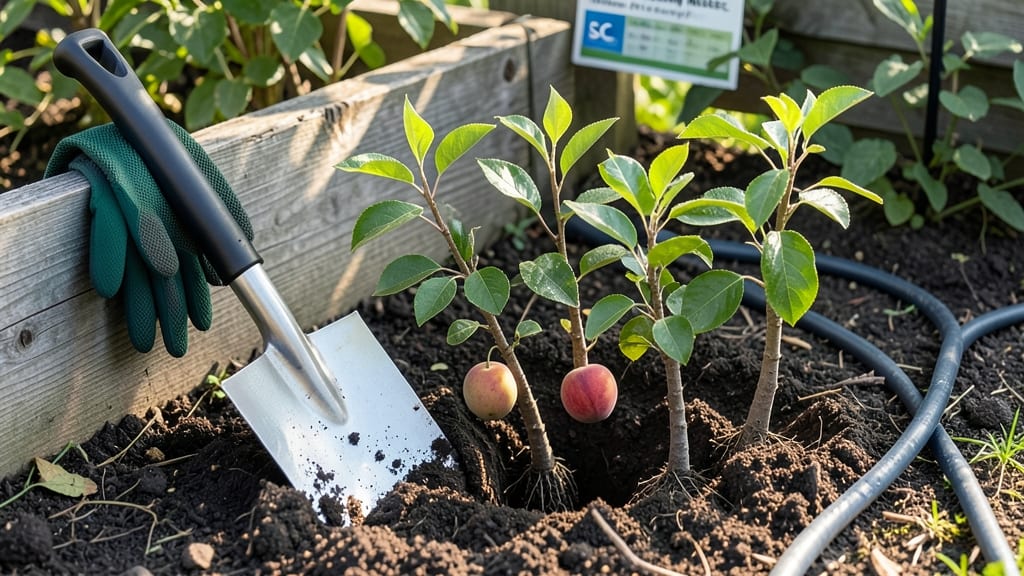
Planting your fruit trees in South Carolina at the wrong time could mean the difference between a bountiful harvest of juicy 🍎 peaches or a sad, fruitless tree. The state’s unique chill-hour zones—where some varieties need 200 hours of winter chill and others thrive with 1,000+ hours—make timing everything.
If you’ve ever wondered why your neighbor’s peach tree bursts with fruit while yours barely buds, the answer likely lies in when (and how) you planted it.
South Carolina’s USDA zones 7b-9a demand precision—bare-root trees need to go in the ground 6-8 weeks before the last frost (usually by early March), while container-grown trees offer more flexibility but still benefit from spring’s mild weather.
I’ll break down the exact planting windows for your region, which fruit trees match SC’s climate best, and how to avoid common mistakes that stall growth. Whether you’re a first-time gardener or a seasoned grower, getting this right ensures your trees fruit abundantly for years to come.
Let’s dive into the chill-hour calendar that’ll transform your backyard into a fruitful paradise—without the guesswork.
South Carolina’s chill-hour zones explained: how they determine fruit tree success
South Carolina’s climate isn’t one-size-fits-all—it spans USDA zones 7b through 9a, creating five distinct chill-hour zones that dictate which fruit trees will thrive in your yard. These chill hours measure how many hours below 45°F (7°C) your area experiences annually, and they’re the secret to successful fruit production.
Plant a peach tree in a low-chill zone (like Charleston), and you’ll likely see minimal to no fruit.
For example, Zone 1 (200-400 chill hours) covers coastal areas like Beaufort and Hilton Head, while Zone 5 (800-1000 chill hours) applies to the Upstate near Greenville. Even within a 50-mile radius, chill hours can vary by 200-300 hours, so always check local data before choosing varieties.
The USDA Plant Hardiness Zone Map and local Cooperative Extension offices are your best resources for precise chill-hour estimates.
Here’s why chill hours matter: Most stone fruits (peaches, plums, cherries) need 400-800 chill hours to break dormancy and set fruit. Plant them in a low-chill zone, and they’ll either leaf out early (risking frost damage) or fail to fruit entirely.
Meanwhile, tropical and subtropical fruits (figs, loquats, persimmons) thrive in under 300 chill hours and can even produce fruit year-round in warmer zones.
Timing your planting around chill hours is crucial. Bare-root trees should go in the ground 6-8 weeks before your area’s last frost—typically late February to early March in most of SC.
This gives roots time to establish before bud break, when the tree starts growing. Container-grown trees, however, can be planted year-round (except during extreme heat or cold), but spring or fall is ideal for minimal stress.
Microclimates add another layer of complexity. A hilltop might experience 100+ more chill hours than a valley below, while a lake or ocean breeze can reduce chill hours by 50-100 hours.
If you’re unsure, use a home weather station for a year to track your local chill hours accurately. This small investment can save you from wasted money on incompatible trees and years of frustration.
Now, let’s break down SC’s chill-hour zones and the best fruit trees for each, so you can make an informed choice based on your exact location.
🌱 South Carolina Chill-Hour Zones & Ideal Fruit Trees
| Zone | Chill Hours | Best Fruit Trees | Planting Window | Key Considerations | |||||||||||||||||||||||||||||||||||
|---|---|---|---|---|---|---|---|---|---|---|---|---|---|---|---|---|---|---|---|---|---|---|---|---|---|---|---|---|---|---|---|---|---|---|---|---|---|---|---|
| Zone 1 | 200-400 | Figs, Loquats, Persimmons, Pomegranates, Tropical Peaches | Year-round (avoid frost) | Heat-tolerant; minimal chill needs | |||||||||||||||||||||||||||||||||||
| Zone 2 | 400-600 | Peaches, Plums, Nectarines, Apricots, Low-Chill Apples | Late Feb–Early April | Watch for peach leaf curl; needs well-draining soil | |||||||||||||||||||||||||||||||||||
| Zone 3 | 600-800 | Cherries, Pears, Standard Apples, Asian Pears | Late Feb–Early March | Prune for airflow; susceptible to fire blight | |||||||||||||||||||||||||||||||||||
| Zone 4 | 800-1000 | High-Chill Apples, European Pears, Sweet Cherries | Early Feb–Late March | Upstate SC only; needs winter chilling | |||||||||||||||||||||||||||||||||||
| Zone 5 | 1000+ | Cold-Hardy Apples, Tart Cherries, European Plums |
Best fruit trees for South Carolina’s climate: chill-hour matching guideSouth Carolina’s humid subtropical climate and varying chill-hour zones mean not all fruit trees thrive equally. Some varieties—like peaches and plums—need 500-800 chill hours to produce fruit, while others, such as figs and persimmons, thrive with as few as 200 hours. Choosing the right tree for your zone ensures a fruitful harvest, not a barren branch. I’ve curated a list of the top-performing fruit trees for SC, ranked by their chill-hour needs, heat tolerance, and disease resistance. Whether you’re in Zone 7b (Piedmont) or Zone 9a (Coastal), this guide helps you pick varieties that’ll flourish—and fruit—year after year. 🌱
For Zone 7b-8a (Piedmont), peaches and plums are my top picks—they handle SC’s cooler winters and produce abundantly. In Zone 8b-9a (Coastal), figs and persimmons shine with their low chill-hour needs and heat tolerance. Pro tip: If you’re in a microclimate (like a sheltered valley), you might get away with planting a higher-chill variety than your official zone suggests. 🌿 Timing your planting matters just as much as the variety. Bare-root trees should go in the ground 6-8 weeks before your last frost (typically by early March), while container-grown trees can handle a slightly later start. For example, a fig tree in Charleston (Zone 8b) can even be planted in late spring if you keep it well-watered during establishment. 🌳 |