
Trees
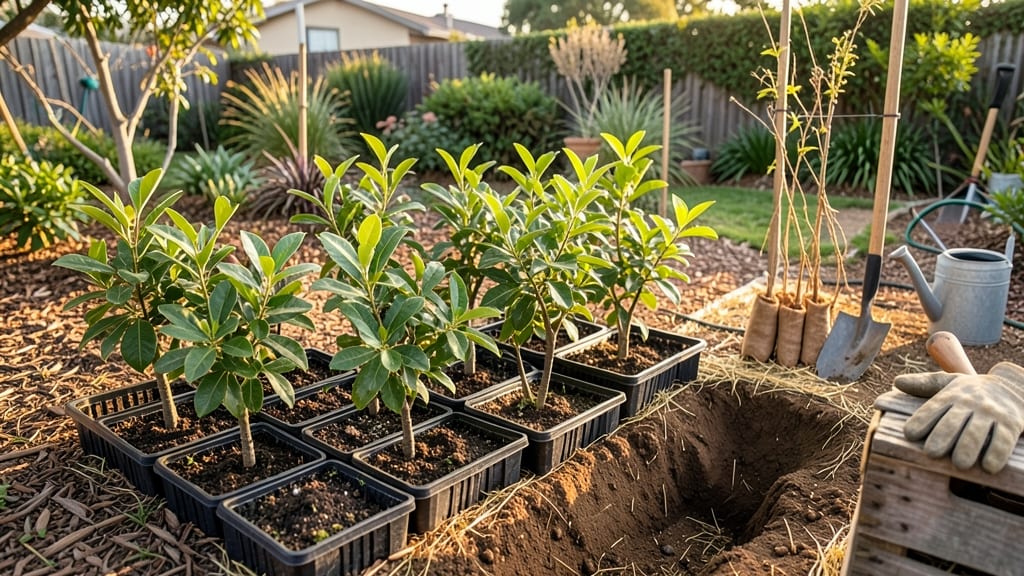
Knowing when to plant fruit trees in South Africa can make or break your orchard dreams—especially with the country’s diverse climate zones and tricky frost risks. Whether you’re in frost-free coastal areas or inland regions where winter chills linger, timing matters more than you might think.
Most gardeners in South Africa’s 10a (Coastal), 9b (Inland), and 8a (Higher Altitudes) zones wait for winter to early spring (June–September) to plant 🍎 fruit trees. This cooler period gives young roots time to establish before summer heat stress kicks in.
But here’s the catch: citrus and subtropical varieties play by different rules than stone fruits or pome trees.
In this guide, I’ll break down the exact planting windows for your region, plus how to spot frost warnings and adjust soil prep for maximum success. You’ll learn which months work best for avocados, peaches, and citrus—so you can avoid costly mistakes and enjoy harvests year after year.
Ready to turn your backyard into a bountiful orchard? Let’s dive into the climate-smart planting schedule that’ll have your fruit trees thriving in no time.
South Africa’s best fruit tree planting months by climate zone
South Africa’s climate zones range from frost-prone inland areas to tropical coastal regions, making planting timing critical. The best window for most fruit trees is winter to early spring (June–September), but specific varieties thrive in different microclimates.
For example, citrus trees in subtropical zones like KwaZulu-Natal can be planted year-round, while stone fruits in the Western Cape need frost-free soil.
Understanding your region’s rainfall pattern is key: summer-rainfall zones (e.g., Gauteng) require planting before winter rains, while winter-rainfall zones (e.g., Cape Town) benefit from spring planting. Even within zones, elevation matters—higher altitudes (like Drakensberg) have shorter frost-free periods, delaying planting until late August.
Below is a zone-specific planting guide for common fruit trees, including frost risks and soil prep tips tailored to South Africa’s USDA Zones 8a–10a. Use this to align your planting with local conditions and avoid common pitfalls like frost damage or waterlogged roots.
| Climate Zone | Best Planting Months | Key Fruit Trees | Frost Risk | Soil Prep Tip |
|---|---|---|---|---|
| Summer-Rainfall (Gauteng, Mpumalanga) | June–August | Peaches, plums, apples | Moderate (May–September) | Amend clay soil with compost |
| Winter-Rainfall (Western Cape) | April–May | Citrus, olives, figs | Low (coastal), High (inland) | Ensure well-draining soil |
| Subtropical (KwaZulu-Natal) | Year-round (best: Feb–April) | Mangoes, avocados, litchis | Minimal (coastal) | Mulch to retain moisture |
| Arid (Northern Cape, Karoo) | March–April | Pomegranates, grapes | High (winter frost) | Use drip irrigation |
For citrus trees, the Western Cape’s winter-rainfall zone is ideal for planting in April–May, when soils are moist but frost risk has passed. In contrast, stone fruits like peaches in Gauteng’s summer-rainfall zone must be planted by August to establish roots before winter rains.
Always check AgriSA’s frost maps—some inland areas experience frost until late September.
Subtropical zones like KwaZulu-Natal offer flexibility, allowing avocado and mango trees to be planted almost year-round. However, avoid planting during peak summer (December–February), when high humidity increases fungal diseases like root rot. Instead, opt for February–April when temperatures are warm but less extreme.
Arid regions like the Northern Cape require drought-resistant varieties (e.g., pomegranates) and deep soil preparation to retain moisture. Plant in March–April, after the first rains, and use organic mulch to lock in humidity. Container planting is also wise here—it gives you control over water and soil quality.
Pro tip: Test your soil’s pH before planting. Most fruit trees thrive in slightly acidic to neutral soil (pH 6.0–7.0), but blueberries (if grown in cooler zones) need acidic soil (pH 4.5–5.5). Adjust with lime or sulfur as needed—this small step can double your tree’s yield.
Remember, young trees are vulnerable to transplant shock. Water deeply once a week for the first month after planting, then taper to bi-weekly watering once established. In coastal areas, reduce winter watering to prevent root suffocation from saturated soil.
🌱
Critical factors that determine planting success in South Africa
South Africa’s diverse climate zones mean that planting timing alone isn’t enough—you must also account for frost risk, soil pH, and water availability. For example, citrus trees thrive in frost-free coastal areas but will fail if planted inland without protection.
Understanding these factors ensures your fruit trees establish strong roots before facing seasonal stress.
Start by checking your region’s last frost date using the SA AgriSA frost maps. Inland areas like the Free State often see frost until July 15, while coastal regions like Cape Town remain frost-free year-round.
Planting stone fruit trees (like peaches) too early in high-frost zones risks winter damage, while subtropical varieties (like mangoes) need frost-free conditions to survive.
Next, test your soil pH—most fruit trees prefer slightly acidic to neutral soil (pH 6.0–7.0). Citrus trees, for instance, thrive in acidic soil (pH 5.5–6.5), while avocado trees need well-draining, slightly alkaline soil (pH 6.0–7.0).
Amend your soil with compost or lime if needed before planting to create the ideal growing environment.
South Africa’s drought-prone summers (November–February) demand deep watering before planting. Young trees need consistent moisture to establish roots—skip this, and you risk transplant shock or stunted growth. Use drip irrigation or soaker hoses to deliver water directly to the root zone.
If you’re planting in containers, timing shifts slightly. Container-grown trees can be planted year-round in frost-free zones, but they require frequent watering (every 5–7 days) and larger pots (minimum 30L) to prevent root binding.
Choose dwarf or semi-dwarf varieties like dwarf citrus or semi-dwarf peaches for easier management in urban spaces.
Finally, consider microclimates—your garden’s specific conditions. A north-facing slope warms up faster in winter, while a shaded area stays cooler. Adjust planting dates by 2–4 weeks if your microclimate differs from the broader zone.
For example, plant avocado trees in September in Durban (subtropical), but wait until October in Johannesburg (cooler inland).
By combining climate zone knowledge, soil prep, and water strategies, you’ll give your fruit trees the best possible start—no matter where you garden in South Africa. 🌱