
Trees
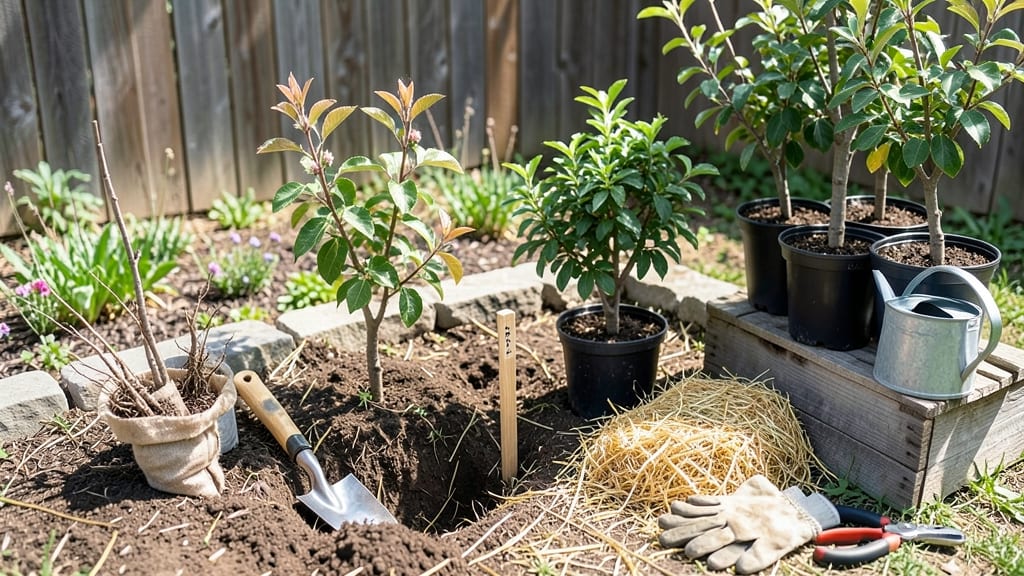
Timing your fruit trees planting in Colorado isn’t just about grabbing a shovel—it’s about outsmarting the state’s tricky climate shifts. Skip the wrong window, and you risk stunted growth or frost damage before your 🍎 even takes root.
Colorado’s USDA Zones 5-7 demand precision: plant too early, and frost zaps tender roots; too late, and your tree won’t establish before winter hits. The sweet spot? Late winter to early spring, when soil thaws but the last frost still looms.
I’ll break down exactly how to match your tree’s chill-hour needs (yes, it’s a real thing!) with Colorado’s microclimates—whether you’re in Denver’s urban heat pocket or the cooler Western Slope.
Ready to set your orchard up for a bountiful harvest? Let’s dive into the steps that’ll have your fruit trees thriving from June to September—no guesswork required.
Colorado fruit tree planting dates by chill-hour requirements
Colorado’s diverse climate means your fruit tree’s chill-hour needs dictate the best planting window. High-chill varieties like apples and cherries need 800-1,200 chill hours, while low-chill types like figs thrive with just 200-400 hours. Planting at the wrong time can delay fruiting or kill your tree entirely.
In USDA zones 4-7, most Colorado counties experience 500-1,000 chill hours annually. Front Range areas (Denver, Fort Collins) typically have 800-1,000 hours, while Western Slope (Grand Junction, Durango) often fall into 400-600 hours.
This matters because a peach tree planted in Denver might fruit poorly if it doesn’t get enough winter chill.
Your best planting window is late winter to early spring—specifically, February through April.
This gives roots time to establish before summer heat arrives. Bare-root trees (dormant) can be planted as early as February, while container-grown trees can wait until March or April to avoid transplant shock from early thaws.
Here’s how to match your tree to Colorado’s microclimates and chill-hour zones:
| Fruit Type | Chill-Hour Range | Best Planting Month | Colorado Regions | Notes |
|---|---|---|---|---|
| Apples, Pears, Cherries | 800–1,200 hrs | March–April | Front Range, North CO | Plant after last frost (typically April 15) |
| Peaches, Plums, Apricots | 400–800 hrs | February–March | Front Range, Western Slope | Avoid late spring planting—needs winter dormancy |
| Figs, Pomegranates, Persimmons | 200–400 hrs | March–April | Southwest CO (lower elevation) | Can handle warmer microclimates—plant after frost risk |
| Dwarf Varieties (e.g., 'Honeycrisp' Apple) | Varies (check label) | March–April | All regions | Smaller root systems—plant earlier for faster establishment |
If you’re in higher elevations (8,000+ ft), like Steamboat Springs or Leadville, aim for late March to early April planting. These areas have longer frost risks and shorter growing seasons, so delay planting until after the average last frost date (check your CSU Extension county report).
For container-grown trees, you have slightly more flexibility. These can be planted up to May, but they’ll need extra watering and mulch protection during Colorado’s hot, dry summers. Bare-root trees, however, must be planted while dormant—never in summer.
Pro tip: Soil temperature matters just as much as air temperature. Wait until the ground warms to 50°F (10°C) before planting. Use a soil thermometer to check—cold soil can stunt root growth.
In Denver or Boulder, this usually aligns with mid-April, while Grand Junction may be ready by early March.
Once planted, mulch heavily (3–4 inches) to insulate roots from spring frost or summer heat waves. A mix of straw and wood chips works best, keeping moisture in and weeds out. Water deeply once a week for the first two months to encourage root spread.
How to calculate your Colorado county’s frost-free window
Determining your local frost-free window is the first step to planting fruit trees successfully in Colorado. The last spring frost and first fall frost dates vary dramatically across the state—from early April in Denver to late May in Grand Junction.
Using Colorado State University’s historical frost data ensures you plant at the right time for your microclimate.
Start by checking your USDA hardiness zone (typically 4-7 in Colorado) and then refine using elevation adjustments. For example, a tree planted at 5,000 feet in Boulder may need a different timeline than one at 7,000 feet in Estes Park.
Urban areas like Denver can also experience urban heat islands, delaying frost by 1-2 weeks compared to rural areas.
Here’s how to adjust for elevation: Subtract 1 week of frost-free season for every 1,000 feet above 5,000 feet. For instance, if your county’s average last frost is April 15 at 5,000 feet, add 2 weeks for a location at 7,000 feet, making your target planting window early March.
Next, account for tree dormancy periods. Most Colorado fruit trees need 6-8 weeks of cool weather after planting to establish roots before active growth begins.
For example, if your last frost is April 15, aim to plant bare-root trees in early March and container-grown trees by mid-April to avoid stress.
Urban gardeners should also note that concrete and pavement can create microclimates 5-10°F warmer than rural areas. If you’re in a city like Colorado Springs, your frost-free window may extend by 1-2 weeks compared to nearby agricultural zones. Always verify with local weather stations or gardening groups for real-time updates.
Finally, consider wind exposure. High-altitude areas like the Western Slope experience colder winds that can delay planting by 2-3 weeks. Shield young trees with windbreaks or choose dwarf varieties that establish faster in harsh conditions.