
Plants
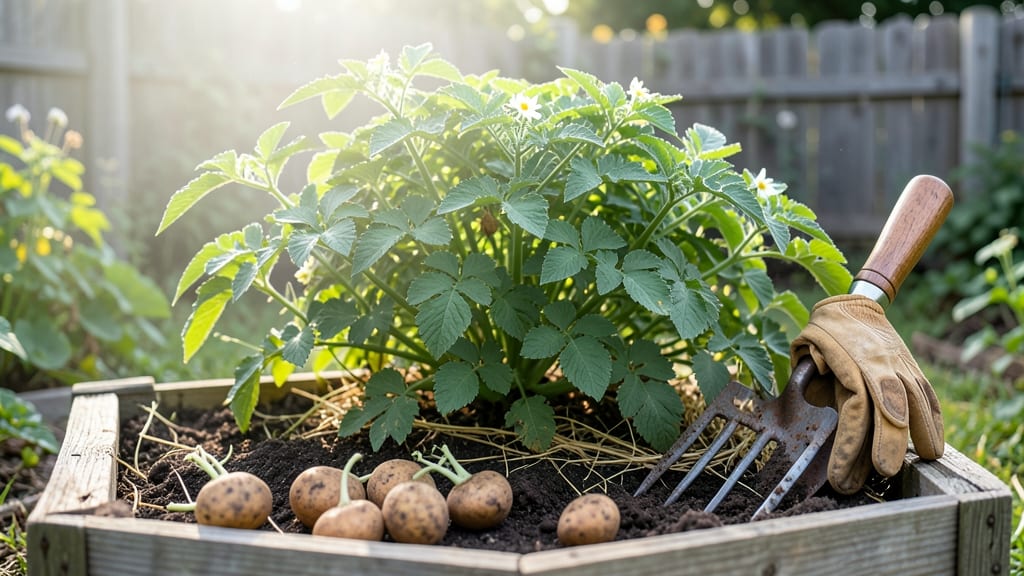
If you're a Missouri gardener eager to grow 🥔 potatoes, timing is the single most important factor—plant too early and frost will ruin your crop, too late and you'll miss the harvest window.
The key to success lies in understanding your local soil temperature rules, which can vary dramatically between Kansas City's cooler microclimates and St. Louis' slightly warmer zones.
Most gardeners in Missouri's USDA 5b-6b zones should plant their seed potatoes 2-4 weeks before the last frost date, typically between early March and mid-April. But here's the catch: your soil needs to reach at least 45°F at 4-6 inches deep—cold soil delays sprouting and invites rot.
I'll show you exactly how to test this critical temperature without fancy equipment.
You might think all potatoes are created equal, but certain varieties thrive in Missouri's climate while others struggle. Early varieties like Yukon Gold give you a head start, while late-season Kennebecs reward patience with larger yields.
We'll break down which potatoes work best for your planting window and how to adjust for both frost-sensitive and hardy types.
Ready to grow potatoes that outperform last year's crop? Let's dive into the exact planting schedule, soil temperature secrets, and variety recommendations that will transform your Missouri garden from "meh" to "mountain of spuds." Your harvest season starts with the right timing—and I've got you covered.
Missouri potato planting calendar: exact dates based on last frost & soil warmth
Timing your potato planting in Missouri depends on two critical factors: soil temperature and last frost dates. Potatoes thrive when soil reaches 45°F (7°C), but planting too early risks frost damage to tender sprouts.
Missouri’s USDA Zones 5b-6b mean your exact dates vary by region—Kansas City, St. Louis, and Columbia each have slightly different windows.
Most Missouri gardeners aim to plant seed potatoes 2-4 weeks before the last frost date. This gives young plants enough time to establish roots before spring frosts.
For example, if your last frost is April 15, your planting window opens around March 20-March 30. Always check your local Almanac's frost predictions for precision.
Here’s the key rule: Never plant when soil temps drop below 40°F (4°C). Cold soil slows sprouting and invites rot. Use a soil thermometer to confirm readiness—this small tool is your best friend for perfect timing.
If you’re unsure, opt for early-maturing varieties like Red LaSoda to hedge against late frosts.
🌱 Missouri Potato Planting Calendar by Region
| Region | Last Frost Date | Ideal Planting Window | Soil Temp Threshold | Notes |
|---|---|---|---|---|
| Northern MO (St. Joseph) | April 10 | March 15-April 1 | 45°F (7°C) | Use row covers for early plants |
| Central MO (Columbia) | April 15 | March 20-April 5 | 45°F (7°C) | Perfect for Yukon Gold |
| Southern MO (Poplar Bluff) | March 25 | February 20-March 15 | 48°F (9°C) | Can plant earlier varieties in Feb |
| St. Louis Metro | April 5 | March 10-April 1 | 45°F (7°C) | Urban gardeners use containers for control |
| Kansas City Metro | April 12 | March 18-April 2 | 45°F (7°C) | Drier soil—mulch heavily |
*Adjust dates 1-2 weeks earlier for early varieties or later for late-season harvests.
Missouri’s microclimates create these regional differences, but one universal rule applies: plant when soil warms consistently above 45°F. In northern Missouri, this often means waiting until late March, while southern Missouri gardeners can start as early as February.
Always monitor weekly temperature trends—a sudden cold snap can set back your crop.
Pro tip: If your soil stays cold past your ideal window, try black plastic mulch to warm it faster. Lay it down 1-2 weeks before planting to create a microclimate. This trick adds 5-10°F to soil temperature, accelerating sprouting. Just remove it once plants emerge to prevent overheating.
For container gardening in Missouri, follow the same soil temperature rules but plant 1-2 weeks earlier. Containers warm faster in spring sun. Use 5-gallon buckets with drainage holes and fill with a mix of 50% compost
How to test soil temperature for perfect potato planting timing in Missouri
Before you rush to plant your seed potatoes, checking soil temperature is the secret weapon that separates thriving crops from failed experiments. In Missouri, where last frost dates can swing wildly between March 15 and April 15, relying on calendar dates alone is risky.
Cold soil below 45°F will delay sprouting for weeks—or worse, cause rot before your potatoes even emerge.
I’ve learned the hard way that planting too early in chilly Missouri soil means wasted seed potatoes and frustrated gardeners. The key is testing at 4-6 inches deep, where the real action happens.
This depth mirrors where your potatoes will eventually grow, giving you an accurate read on their future environment.
You don’t need a fancy soil thermometer to succeed—though they’re worth the $15 investment for repeat gardeners. For budget-friendly options, I’ll show you how to use a digital meat thermometer (cleaned thoroughly!) or even a DIY stick method with a thermometer tied to a dowel.
⚠️ Warning: Cold Soil Kills Potatoes
Soil below 45°F (7°C) at planting depth (4-6 inches) causes:
- Delayed sprouting (waiting 2+ weeks for growth)
- Rot before emergence (seed potatoes decompose)
- Weak starter plants (prone to disease)
Missouri’s USDA 5b-6b zones often see 40°F soil in early March—wait for warmth!
Start testing soil temperatures 2 weeks before your target planting date. Check in the morning (soil is coolest) and evening (warmer) to account for daily fluctuations.
If temperatures hover around 45-50°F, your potatoes are ready to go. Below 45°F? Wait another week—your patience will pay off with stronger plants.
For gardeners without a thermometer, dig a 6-inch hole in your planting area and feel the soil with your hand. If it feels cooler than your wrist (which is about 90°F), it’s too cold.
A wet finger test works too: press your finger into the soil—if it feels like a chilled yogurt, wait for warmer days.
Pro tip: Black plastic mulch can warm soil by 5-10°F in just days. Lay it down 1-2 weeks before planting to create a microclimate that encourages faster sprouting. I’ve seen this trick shave 10 days off my planting timeline in cooler Missouri springs.