
Plants
Timing your grapes planting in Georgia right could mean the difference between a thriving vineyard and a failed harvest.
With the state's unique mix of USDA zones 7a-8b and microclimates, knowing when to plant is everything—especially since late frosts or early heat can ruin your vines before they even take root.
Most Georgia gardeners swear by planting 🍇 grapes in late winter to early spring, when the soil is workable but frost risks have passed. But here’s the catch: warm-season varieties like muscadines might actually prefer a fall start, while cooler-climate wine grapes need those critical chill hours.
Let’s break down the best windows for your specific zone and grape type.
Whether you’re prepping soil in February or waiting for March’s last frost, the key is understanding your local heat patterns. I’ll walk you through the exact steps—from soil prep to trellis setup—that’ll give your grapes the best shot at a bountiful harvest by August or October.
Ready to avoid common mistakes and maximize your grape-growing success? Let’s dive into the perfect planting schedule for Georgia’s diverse climate zones.
Georgia’s best grapes planting months by chill hours & heat zones
Georgia’s diverse climate—spanning USDA zones 7a to 8b—means grape growers must align planting with chill hours and heat tolerance.
Northern Georgia’s cooler microclimates (like Blue Ridge Mountains) thrive with 500–1,000 chill hours, while southern regions (e.g., Savannah) need 300–500 chill hours for varieties like Muscadines.
For wine grapes (e.g., Cabernet Franc), aim for late winter to early spring (February–March) when soil temps hit 50°F. Table grapes (like Thompson Seedless) prefer warmer zones (8a–8b), ideal for March–April planting after frost risk passes.
Southern Georgia’s longer frost-free season (240+ days) allows fall planting (September–October) for heat-loving varieties. Always check local chill hour maps—Georgia’s University Extension offers tools to match varieties to your zone.
🌱
Georgia’s humidity and heat demand well-draining soil—amend clay with compost or sand to prevent root rot. Trellis systems are critical: vines need 10–15 feet of vertical space for airflow and sunlight penetration.
For container growing, use 5-gallon pots with drainage holes and plant in May after last frost. Dwarf varieties like Flame Seedless adapt well but still need 6+ hours of sun daily.
🌿
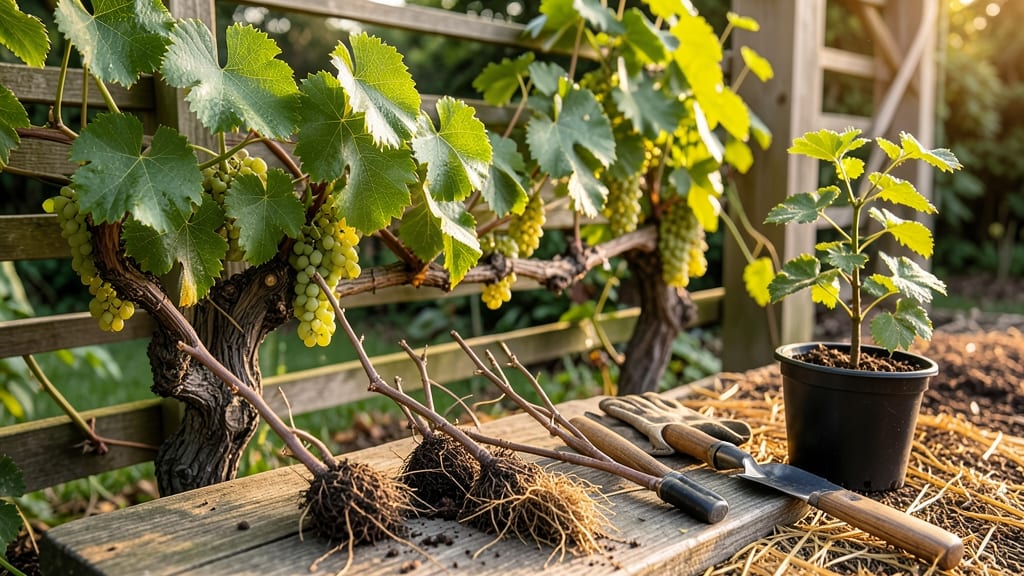
Pro tip: Bare-root vines (dormant) are easiest to plant in Georgia’s mild winters. Soak roots for 1–2 hours before planting to reduce transplant shock. Mulch with straw or wood chips to retain moisture and regulate soil temp.
🍇
Step-by-step planting timeline for Georgia grapes (preparation to first harvest)
Planting grapes in Georgia isn’t just about picking a month—it’s about following a precise timeline that accounts for soil prep, rootstock selection, and post-planting care.
Whether you’re planting bare-root vines in February or container grapes in May, each step builds toward a successful harvest by August or October.
Start by testing your soil pH (5.5–6.5) in January. Georgia’s clay-heavy soils often need amendments like compost or sulfur to create the ideal growing medium. While you’re waiting for the perfect planting window, prepare your trellis system—a 10–15-foot vertical structure is essential for airflow and sunlight exposure.
🌱
For container growing, adjust your timeline slightly: plant in May after last frost and use 5-gallon pots with drainage holes. Dwarf varieties like Flame Seedless grow well in containers but still need 6+ hours of sun daily.
🍇
One common mistake Georgia gardeners make is planting too early in frost-prone areas. Always check your local frost dates—the University of Georgia Extension provides free frost maps. If you’re in North Georgia (Zone 7a), wait until mid-March to avoid damaged vines.
Pro tip: Mulch heavily in summer months to retain moisture and protect roots from Georgia’s intense heat. A 3-inch layer of straw or wood chips can reduce watering needs by up to 30%.
✂️