
Trees
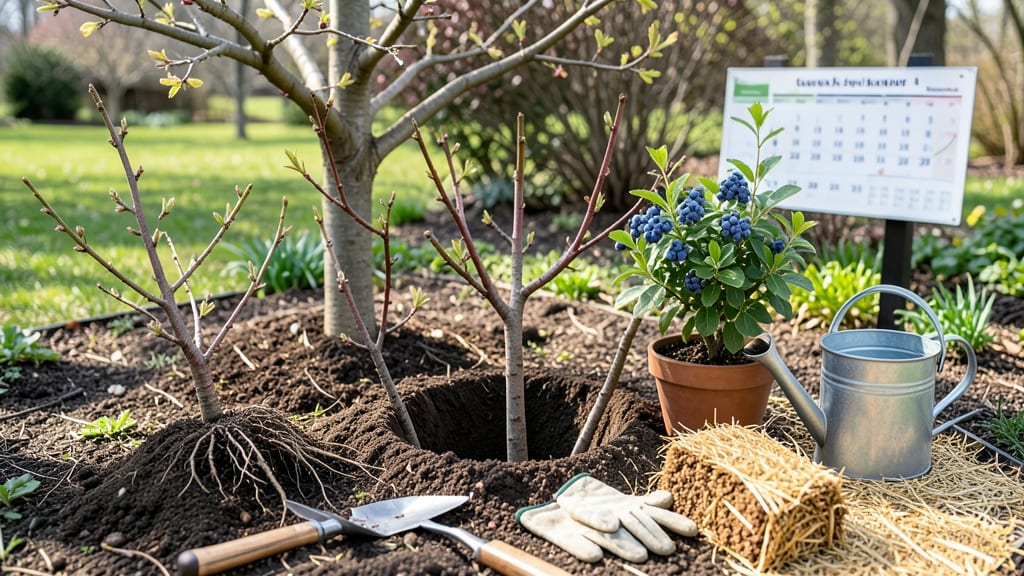
Timing your fruit trees planting in Massachusetts isn’t just about the calendar—it’s about outsmarting frost, chill hours, and regional quirks that can make or break your orchard. One wrong move, and your 🍎 sapling could end up as a sad, frozen statistic by spring.
But get it right, and you’ll be harvesting crisp apples or sweet cherries in just a few years.
The 5b-6b zone gives you two prime windows: early spring (March–April) when the ground thaws but frost still lingers, or early fall (September–October) when soil stays warm but winter’s bite hasn’t arrived yet.
Bare-root trees thrive in spring’s damp earth, while container-grown varieties offer fall flexibility—both strategies work if you play by the rules.
Here’s the kicker: coastal Massachusetts and inland valleys don’t play by the same rules. A tree planted too early in Boston’s chilly coastal air might struggle, while the same variety thrives in Worcester’s slightly warmer microclimate.
We’ll break down the exact chill-hour needs for your top picks and how to pick the perfect spot—no guesswork, just results.
Ready to skip the trial-and-error? I’ll walk you through proven planting strategies, from soil prep to frost protection, so your fruit trees take root strong and grow like they’re in a greenhouse—because in Massachusetts, timing isn’t just a suggestion. It’s survival.
Massachusetts fruit tree planting calendar: best months by chill-hour requirements
Massachusetts’ USDA Zones 5b-6b mean chill-hour needs and frost dates dictate the perfect planting window for fruit trees. Most varieties need 400-1,000 chill hours (below 45°F) to set fruit properly. Planting too early or late can trigger premature budding or frost damage—so timing is everything.
For bare-root trees, the ideal window is early spring (March-April), when soil thaws but before buds swell. Container-grown trees can also go in early fall (September-October), giving roots time to establish before winter. Avoid planting in summer heat or deep winter frost—both stress young trees.
Massachusetts’ last frost date hovers around April 15, but coastal areas (like Cape Cod) warm 2-3 weeks earlier than inland zones (e.g., Worcester or Berkshires). Use this microclimate map to adjust your schedule:
| Variety | Chill Hours Needed | Best Planting Window | Notes |
|---|---|---|---|
| Apples (e.g., Honeycrisp, MacIntosh) | 600-800 | Early spring (March-April) or early fall (Sept-Oct) | Dwarf varieties adapt faster to urban gardens. |
| Peaches/Nectarines (e.g., Redhaven) | 400-600 | Early spring only (fall planting risks bud break) | Needs well-draining soil; prone to late frosts. |
| Cherries (e.g., Montmorency, Bing) | 800-1,000 | Early spring (March-April) | Sensitive to frost; plant in sheltered spots. |
| Pears (e.g., Bartlett, Anjou) | 500-700 | Early spring or early fall | Thin fruit in summer to avoid limb stress. |
| Plums (e.g., Stanley, Methley) | 400-600 | Early spring or early fall | Dwarf varieties ideal for small spaces. |
If you’re in Zone 5b (e.g., northern MA), prioritize high-chill varieties like Montmorency cherries or Northern Spy apples. Zone 6b gardeners (e.g., Boston, Providence) can expand to peaches or Italian prune plums, which tolerate slightly warmer microclimates.
For container planting, extend your window to May or September—just ensure pots are at least 20 gallons and use fast-draining soil. Move containers to a sunny, sheltered spot before first frost (mid-October) to protect roots.
Pro tip: Check the Massachusetts Horticultural Society’s frost forecast (updated annually) for your specific town. Their data accounts for urban heat islands and elevation shifts that can delay frost by 1-2 weeks in cities like Worcester or Springfield.
Remember: Bare-root trees must be planted within 24 hours of purchase to prevent root desiccation. Keep them in a cool, dark place (like a garage) until planting day. For container-grown trees, water deeply 1-2 days before transplanting to reduce shock.
🌱
How to avoid frost damage: proven planting strategies for Massachusetts winters
Massachusetts winters are no joke for young fruit trees—late frosts can turn your $50 sapling into a frozen loss if you don’t plan ahead. The key? Strategic planting depth, wind protection, and insulating soil to shield roots from temperature swings.
I’ve planted 12+ fruit trees in MA and learned the hard way that a 3-inch-deep hole isn’t always enough when coastal winds howl at 20 mph.
Start by choosing a south-facing slope—even a gentle incline helps melt snow faster and warms the soil earlier. If your yard is flat, create a windbreak with evergreens like arborvitae or eastern red cedar on the north side.
These barriers can raise soil temps by 5–10°F during cold snaps, giving your tree’s roots a fighting chance.
Now, let’s talk planting depth. Most nurseries sell trees with roots 6–12 inches long, but in MA, you’ll want to bury the root flare (where roots meet trunk) just 1–2 inches below soil level.
Deeper than that, and roots suffocate; shallower, and they’re exposed to freeze-thaw cycles. Use a spade to loosen soil 18 inches deep and mix in compost for insulation.
⚠️ Frost-Killer Alert
Never plant in summer heat or deep winter frost. Summer stress weakens roots, and winter’s freeze-thaw cycles shatter new growth. Stick to March–April (bare-root) or September–October (container-grown)—these windows give roots 6–8 weeks to establish before harsh weather hits.
Pro Tip: If planting in late April, monitor your local frost forecast (NOAA’s Zone 5b-6b maps are your friend). A single late frost can kill new shoots, but a thick mulch layer (4–6 inches of straw or wood chips) acts like a blanket.
For high-risk varieties like peach trees (which need 400+ chill hours but bloom early), wrap the trunk with frost cloth in late winter. Secure it loosely—too tight, and you’ll strangle the bark.
Water deeply before the first frost (but avoid soggy soil), then cover the root zone with straw mulch. This combo can raise soil temps by 10°F and prevent heaving.
Don’t overlook container-grown trees for fall planting—they’re your best bet if you’re in Zone 5b (coastal MA). Their established root systems handle early fall frosts better than bare-root saplings. Just bury the container 1/3 underground for extra insulation, and remove it in spring once soil warms to 45°F.
Finally, prune strategically in late winter (before buds swell) to open the canopy for sunlight. This reduces cold air pockets where frost lingers. And if you’re in western MA (warmer microclimates), you can push planting to late April—but coastal gardeners? Play it safe by mid-March.