
Plants
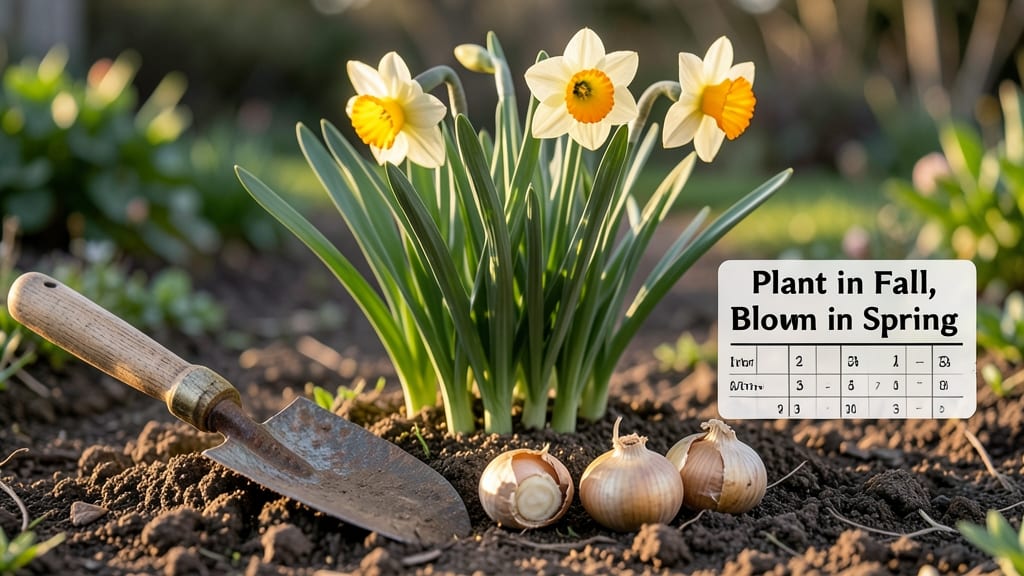
Timing your daffodil planting in Colorado can mean the difference between a garden bursting with cheerful 🌼 blooms next spring and bulbs that never make it through winter. The key? Planting them in early fall—between September and November—when soil temperatures drop but before the ground freezes solid.
Colorado’s USDA Zones 5-7 create unique challenges, especially at higher elevations where frost can sneak in earlier than expected. If you wait too late, your daffodils won’t have enough time to establish roots before winter dormancy sets in.
But don’t rush either—planting too soon can leave bulbs vulnerable to rot or pests.
I’ve learned the hard way that 6 weeks before the first frost is the sweet spot for most Colorado gardens. That means late September or early October for the Front Range, but you’ll need to adjust for the Western Slope or Eastern Plains where conditions vary.
Let’s break down exactly how to time it right for your specific location.
You’ll also discover how to prepare your soil, choose the right bulbs, and protect your investment from Colorado’s unpredictable winter weather. With these tips, your daffodils will thrive and reward you with vibrant spring blooms that brighten up even the coldest mountain days.
Ideal planting windows for Colorado daffodils by region
Colorado’s diverse elevations and microclimates mean planting times vary dramatically from the Front Range to the Western Slope. In Denver and Boulder (USDA Zones 5-6), aim for mid-September to early October—when soil temps drop below 60°F (15°C) but before hard frost hits.
Higher elevations like Aspen or Leadville (Zone 4-5) need earlier action, ideally late August to early September, while drier Western Slope areas (Zone 6-7) can wait until October.
Your last frost date is your deadline: plant 4-6 weeks before the first expected frost. In Colorado, this typically falls between mid-October and early November, depending on elevation. For example, Grand Junction’s later frost allows October planting, while Steamboat Springs’ earlier cold means September is critical.
Use your local CoCoRaHS station data or Colorado State University’s frost maps to pinpoint your exact window.
Soil temperature is more important than air temperature. Use a soil thermometer to confirm readings of 50-60°F (10-15°C) at 6-inch depth. If your soil stays above 65°F (18°C), bulbs may sprout prematurely and get fried by early frosts.
In high-altitude gardens (7,000+ feet), cooler soils mean you can plant up to 2 weeks later than lower elevations.
Timing also affects bloom performance. Bulbs planted in early September often produce larger flowers the following spring, while late October plantings may yield smaller blooms or delayed emergence. For consistent results, stick to the sweet spot: late September to early October for most of Colorado’s populated areas.
Here’s how your region impacts timing:
If you’re unsure about your exact last frost date, err on the earlier side. Daffodil bulbs can handle light freezing once planted, but they won’t tolerate soggy soil from early rains.
In wet years, consider raising beds or planting on slopes to improve drainage. For container gardening, use well-draining mixes with perlite or sand to prevent bulb rot.
Pro tip: Chill your bulbs for 4-6 weeks before planting if you’re in a warmer microclimate (like urban Denver). Store them in a cool, dark place (35-45°F / 2-7°C) to mimic natural winter conditions. This trick boosts bloom quality by 20-30% in unseasonably warm Colorado springs.
Remember, daffodils thrive on patience. While they’ll pop up in spring, their roots need 6-8 weeks to establish before winter. Rush the process, and you’ll risk weak stems or no blooms next year.
Mark your calendar for September 20th—this is the magic deadline for most Colorado gardeners to plant before frost locks the soil.
Finally, adjust for your specific yard. A south-facing slope may stay warmer longer, while a north-facing garden cools faster. Observe your local plants like crocuses or snowdrops—they’re early bloomers that signal when it’s safe to plant.
Ideal planting windows for Colorado daffodils by region
Colorado’s diverse climate means your daffodil planting window depends heavily on where you live. The Front Range (Denver, Boulder) typically has a 6-week window from late September to early November, while higher elevations like Eagle County or Telluride need to plant as early as mid-September to avoid early freezes.
For the Western Slope (Grand Junction, Durango), aim for late September to October, as frost can arrive earlier than the Front Range. Meanwhile, the Eastern Plains (Pueblo, Colorado Springs) have slightly more flexibility, with early October being a safer bet for most gardeners.
| Region | Best Planting Window | Soil Temp Threshold | Frost Risk |
|---|---|---|---|
| Front Range (Denver/Boulder) | Late Sept - Early Nov | 50-60°F | Moderate |
| Western Slope (Grand Junction) | Late Sept - Oct | 45-55°F | High |
| Eastern Plains (Pueblo) | Early Oct - Mid-Nov | 55-65°F | Low |
| High Elevations (Aspen) | Mid-Sept - Late Sept | 40-50°F | Very High |
Use your local frost date as your guide—aim to plant 4-6 weeks before the first hard frost. In Colorado, this typically falls between mid-October and early November, but check your USDA Zone for precision.
For example, Zone 5 areas (like Steamboat Springs) need earlier planting than Zone 7 (Albuquerque area).
Pro tip: Test your soil temperature with a thermometer before planting. Daffodils thrive when soil is between 50-60°F. If it’s warmer, wait a few days to avoid rot. If it’s cooler, plant immediately to maximize root growth before winter.
Don’t forget that high-altitude gardens (above 7,000 feet) have shorter growing seasons. Plant 2-3 weeks earlier than lowland areas to compensate. For instance, if the Front Range’s frost date is November 1st, high-altitude gardeners should plant by October 1st.
Timing isn’t just about frost—it’s also about soil moisture. Plant when rains have softened the soil but haven’t turned it into mud. This usually aligns with early fall, but Colorado’s unpredictable weather means flexibility is key.
If you miss the ideal window, you can still plant in late fall, but growth may be slower next spring.