
Plants
Planting blackberries in Georgia might seem straightforward, but timing is everything—and getting it wrong could mean the difference between a bountiful harvest of juicy 🫐 berries and wasted effort. The right window ensures your bushes establish roots before summer heat or winter chill throws them off track.
Georgia’s 7b-8b climate gives you two prime planting opportunities: late winter to early spring or fall. But here’s the catch—fall planting (September-October) often works best because it lets roots settle before summer’s intensity.
Spring planting (February-March) is riskier if frost lingers, but with the right variety, it can still pay off.
I’ll break down exactly when to plant based on your blackberry type—whether you’re growing thornless varieties or traditional ones—and how to match them to Georgia’s chill-hour needs. No more guessing whether your bushes will thrive or struggle.
Ready to set up your blackberries for success? Let’s dive into the perfect planting schedule so you can enjoy homegrown berries from May through August without the headaches.
Georgia blackberry planting zones & chill-hour requirements by variety
Georgia’s USDA Zones 7b-8b create a perfect climate for blackberries, but chill-hour requirements determine which varieties thrive in your specific microclimate. Most Georgia growers succeed with 300-1,000 chill hours, but matching your variety to your zone prevents poor fruit set or stunted growth.
For example, Zone 7b gardeners need varieties like 'Natchez' (500-700 chill hours), while Zone 8b thrives with 'Prime-Ark Freedom' (300-500 chill hours).
Thornless varieties like 'Arapaho' (700-900 chill hours) are popular in North Georgia's cooler pockets, while traditional types like 'Ouachita' (800-1,000 chill hours) dominate South Georgia's warmer regions. Always check your local frost dates—planting too early in Zone 8b risks heat stress before dormancy breaks.
🌱
| Variety | Chill Hours | Best Georgia Zone | Planting Window | Notes |
|---|---|---|---|---|
| Natchez | 500-700 | 7a-7b | Sep-Oct or Feb-Mar | Thornless, early ripening |
| Arapaho | 700-900 | 7b | Sep-Oct | Thornless, high yield |
| Prime-Ark Freedom | 300-500 | 8a-8b | Feb-Mar | Heat-tolerant, disease-resistant |
| Ouachita | 800-1,000 | 7a-7b | Sep-Oct | Large berries, thorny |
| Chester | 400-600 | 8a-8b | Feb-Mar | Thornless, compact |
Your chill-hour total is calculated by multiplying average nighttime temps below 45°F by the number of hours they occur. Georgia’s North Georgia mountains often exceed 1,000 chill hours, while South Georgia coastal areas may only reach 300-500.
Use a chill-hour calculator or local extension office data to confirm your exact total before selecting varieties.
For bare-root plants, aim to plant when soil temps are 40-60°F—typically late February to early March in Zone 8b or September to October in Zone 7b. Container-grown blackberries offer more flexibility but require consistent moisture during establishment, so avoid planting during summer heatwaves.
🌿
Soil preparation is equally critical. Georgia’s clay-heavy soils need amendment with compost or sand to improve drainage, while sandy soils benefit from organic matter like peat moss.
Test your soil’s pH (ideal 5.5–6.5)—blackberries hate alkaline conditions. If your soil is too acidic (<5.0), apply lime; if too alkaline (>7.0), use sulfur.
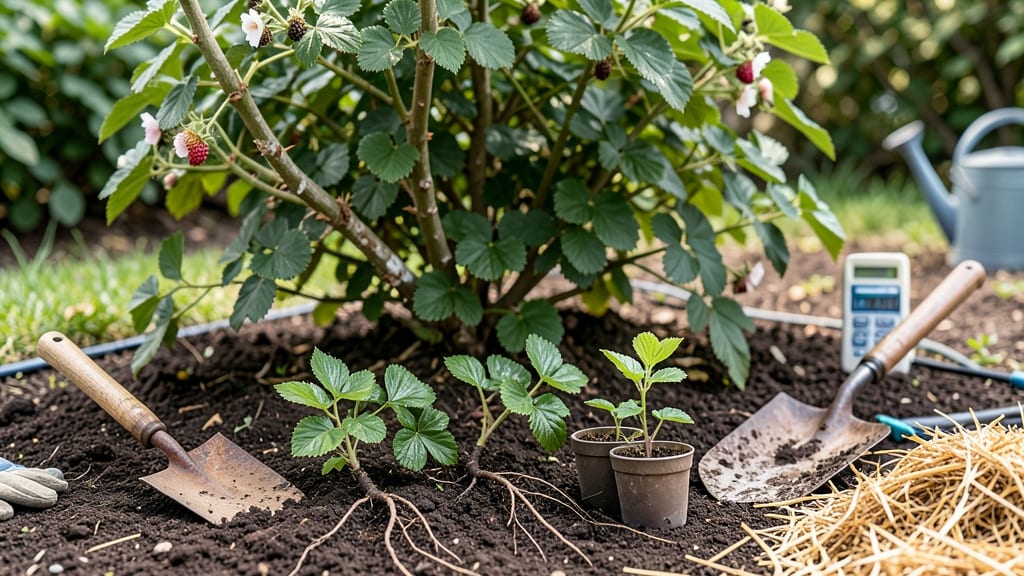
Pro tip: Mulch heavily after planting with straw or wood chips to retain moisture and regulate soil temps. This is especially important in Zone 8b’s warmer winters, where mulch prevents root freeze-thaw cycles that damage young plants.
✂️
Finally, consider your trellis system before planting. Georgia’s humid summers increase fungal diseases like anthracnose, so choose a fan-trained or T-bar trellis that improves airflow. Install trellises at planting to avoid damaging established roots later. For thornless varieties, opt for plastic-coated wire to prevent hand injuries during harvest.
🫐
Step-by-step planting timeline: from dormancy to first harvest
Timing your blackberry planting in Georgia isn’t just about the calendar—it’s about matching your variety’s chill-hour needs with Georgia’s fall-to-winter transition. For most varieties, September to early October is ideal because it allows roots to establish before summer’s heat.
But if you’re planting bare-root canes in late winter (February-March), you’ll need to protect them from late frosts until soil temperatures warm.
Here’s my month-by-month breakdown for planting blackberries in Georgia, whether you’re starting with bare-root canes or container-grown plants. Each step ensures your bushes get off to a strong start, so you’re not scrambling to fix mistakes later.
📅 Step-by-Step Planting Timeline for Georgia
- August-September: Prepare soil by amending with compost and sand (if clay-heavy) to improve drainage. Test pH (5.5-6.5) and adjust with lime or sulfur if needed.
- Late September: Plant container-grown blackberries (they establish faster) or bare-root canes in well-drained soil. Space rows 6-8 feet apart and plants 4-5 feet apart for airflow.
- October-November: Apply 2-3 inches of mulch (straw or pine needles) to retain moisture and protect roots from winter temperature swings. Water deeply before first frost.
- December-February: Monitor for late frosts (common in Zone 7b). Cover young plants with burlap or frost cloth if temps drop below 20°F. Avoid disturbing roots.
- March-April: Prune dead canes and fertilize with balanced 10-10-10 once new growth appears. Increase watering as soil warms.
- May-June: Watch for flower buds—this signals your first harvest window (late May to August). Thin canes to 4-5 strongest stems per plant for better fruit production.
If you’re planting in spring (February-March), rush the process—bare-root canes need to establish roots before Georgia’s heat peaks in June. Start with hardened-off container plants if possible, as they handle transplant shock better.
For Zone 8b growers, spring planting is riskier due to early heat stress, so fall planting is strongly recommended.
Pro tip: Water deeply 2-3 times per week after planting to encourage root growth, but avoid soggy soil—blackberries hate waterlogged roots. Use a soaker hose to deliver moisture directly to the root zone without wetting foliage (which promotes fungal diseases).
Once your bushes are established (year 2+), they’ll reward you with juicy 🫐 berries from May through August, but getting there starts with perfect timing and care in the first 6 months. Don’t skip the mulch—it’s your best defense against Georgia’s hot summers and mild winters.