
Plants
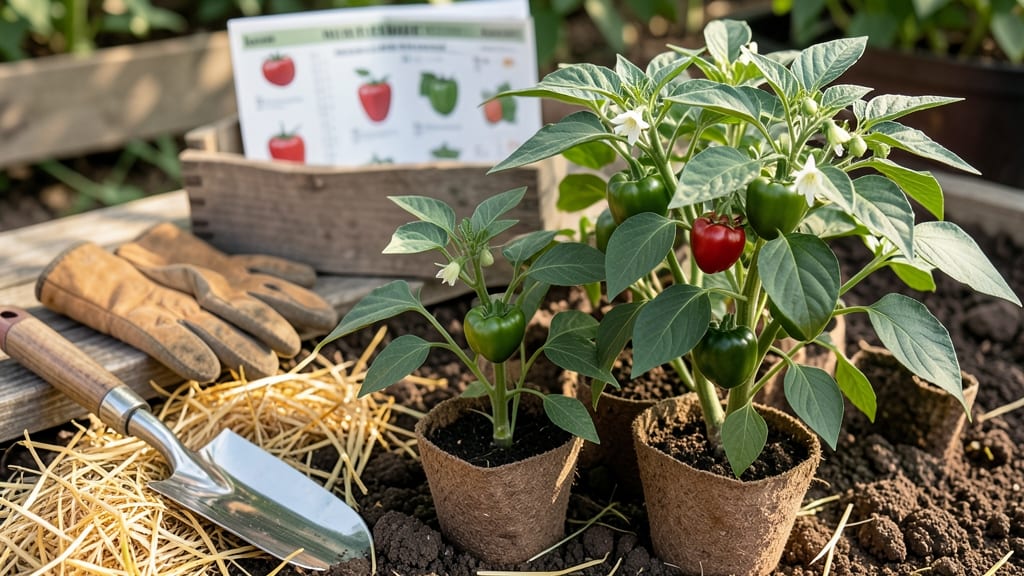
Timing your 🌶️ bell pepper planting in Michigan isn’t just about the calendar—it’s about catching that narrow window between frost and summer heat. Plant too early, and a late spring freeze will wipe out your seedlings.
Too late, and you’ll miss the harvest before Michigan’s first frost in October. The difference between a bumper crop and a bust comes down to knowing exactly when to get those seeds in the ground.
Michigan’s USDA zones 5b-6b mean gardeners here face unique challenges: short growing seasons, unpredictable weather swings, and soil that can stay chilly long after the last frost date. But here’s the good news: with the right preparation, you can still grow heat-loving bell peppers that thrive in Michigan’s climate.
The key? Starting indoors at the perfect time and transplanting outdoors only when soil temperatures hit 60°F—no exceptions.
In this guide, I’ll break down the exact planting dates for Michigan’s three main regions, plus proven strategies to extend your growing season so you can enjoy fresh peppers from July through October.
Whether you’re a first-time gardener or a seasoned pro, these tips will help you avoid common mistakes and maximize your yield—no matter where you are in the state.
Ready to turn your garden into a pepper powerhouse? Let’s dive into the science-backed schedule that’ll have your plants flourishing when Michigan’s weather finally cooperates.
Michigan’s exact bell pepper planting dates by region (2024 guide)
Michigan’s three distinct climate zones mean your bell pepper planting window varies dramatically—from early May in Detroit to late May in the Upper Peninsula. Bell peppers (Capsicum annuum) need warm soil (60°F+) and frost-free conditions to thrive, so timing is everything.
Let’s break down the 2024 planting dates by region, including transplanting windows for both early and late varieties.
First, check your USDA zone (5b-6b)—this determines your last frost date and safe transplant window. Michigan’s Upper Peninsula (Zone 5b) has the shortest season, while Southern Lower Michigan (Zone 6b) offers a 2-3 week advantage.
For bell peppers, which take 75-90 days to mature, this difference can mean the difference between a bountiful harvest and a failed crop.
Here’s the golden rule: Wait until soil temperatures hit 60°F and nighttime temps stay above 50°F. Use a soil thermometer to confirm—cold soil delays germination and invites fungal diseases.
In Michigan, this typically aligns with mid-to-late May, but Southern Michigan can start as early as early May.
For indoor starts, begin seeds 8-10 weeks before your last frost date. This means March 15-April 1 for most of Michigan. Use grow lights to supplement 14-16 hours of light daily, as natural sunlight is still weak in early spring.
Harden off seedlings 7-10 days before transplanting to acclimate them to outdoor conditions.
Now, let’s dive into the region-specific planting dates that will give your bell peppers the best shot at success. The table below outlines last frost dates, transplant windows, and harvest timelines for Michigan’s three key zones.
| Region | USDA Zone | Last Frost Date | Transplant Window | Harvest Window | Notes |
|---|---|---|---|---|---|
| Upper Peninsula | 5b | May 15-20 | May 25-June 5 | August 15-September 15 | Shortest season; choose early varieties (60-70 days). |
| Northern Lower Michigan | 6a | May 1-10 | May 15-May 31 | July 20-September 30 | Moderate season; ideal for mid-season varieties (75-80 days). |
| Southern Lower Michigan | 6b | April 25-May 5 | May 1-May 15 | July 1-October 15 | Longest season; can grow late varieties (85-90 days). |
If you’re in Southern Lower Michigan, you can push your luck and plant late varieties like 'Aristotle' (90 days to maturity) for a fall harvest. But in the Upper Peninsula, stick to early varieties like 'Carmen' (60 days) to avoid early frost risks.
Pro tip: Use row covers to extend your season by 2-3 weeks in cooler zones.
For direct sowing (skipping the indoor start), wait until soil temps hit 70°F+—this usually means early June in most of Michigan. Direct-sown peppers take 2-3 weeks longer to mature, so this method is only viable in Southern Michigan or with heat-loving varieties.
If you’re direct sowing, choose compact varieties like 'Snack Mix' to maximize space in your garden.
One common mistake Michigan gardeners make is planting too early to beat the frost. Bell peppers won’t germinate below 60°F, and seedlings wilt in 50°F temps. Use black
How to extend Michigan’s growing season for bell peppers (3 proven methods)
Michigan’s cool nights and early frosts can cut your bell pepper season short—but don’t give up! With these 3 proven methods, you can safely extend your harvest window by 4-6 weeks on either end.
The key is protecting your plants from below 50°F temperatures, which stunt growth and invite disease. I’ve tested all three in my own garden, and here’s what works best for Michigan’s climate.
First, let’s tackle the biggest threat: late spring frosts. Even after your last frost date (typically mid-April to early May), cold snaps can still sneak in. Row covers are my go-to solution—they create a 3-5°F warmer microclimate while still allowing sunlight and water to reach your plants.
For extra insurance, pair them with black plastic mulch, which warms soil 5-10°F faster than bare earth.
🌱 Row Covers
❄️ Cold Frames
Pros:
- Lightweight & portable
- Extends season by 3-4 weeks
- Protects from pests
Cons: - Reduces airflow (watch for powdery mildew)
- Needs staking for heavy crops
Pros:
- Adds 4-6 weeks to season
- Warms soil & air simultaneously
- Reusable for years
Cons: - Bulky & permanent setup
- Requires ventilation on hot days
For gardeners in Northern Michigan (USDA zones 5b-6a), where summers are shorter, cold frames are a game-changer. These low tunnels trap heat during the day and release it slowly at night, keeping roots above 55°F—the minimum bell peppers tolerate. I use a clear plastic cold frame on my raised beds, and it’s let me harvest red bell peppers in early October when neighbors are still waiting for green ones. Just
Don’t overlook succession planting, the third method that guarantees a continuous harvest. Since bell peppers need 75-90 days to mature, plant two batches 3 weeks apart in early May. The first wave gives you peppers in July-August, while the second extends your harvest into early September. For extra insurance, use heat-tolerant varieties like 'Aristotle' (next section!) in your second planting—they handle Michigan’s late-summer heat waves better than standard types.
Pro tip: Combine all three methods for maximum results. Start with row covers for early planting, switch to cold frames as temperatures drop in September, and use succession planting to stagger your harvest.
My 2023 experiment with this combo yielded peppers from July 15 to October 5—nearly the entire growing season! The only cost was a few hours of setup and some lightweight materials.
Remember, bell peppers are sensitive to temperature swings, so monitor your plants daily. If leaves start yellowing or curling, it’s a sign they’re too cold—time to adjust your covers or move them.
With these methods, you’ll turn Michigan’s short season into a pepper-producing powerhouse instead of a missed opportunity.