
Plants
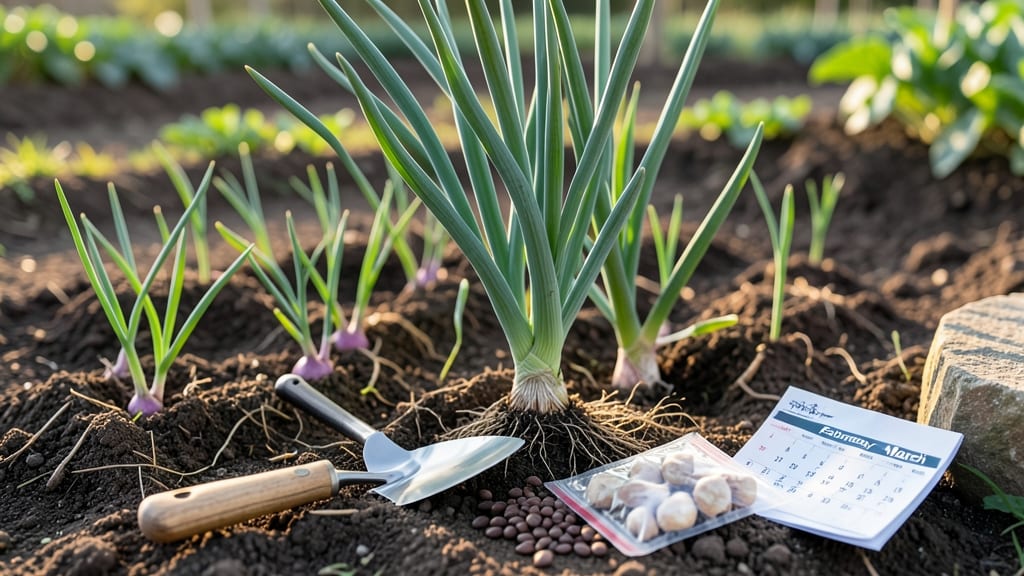
Timing your 🧅 onion planting just right in North Carolina means the difference between a harvest of sweet, flavorful bulbs and a frustrating garden fail. If you plant too early, those tender onions might bolt before they mature—leaving you with bitter, unusable greens instead of the plump harvest you crave.
North Carolina’s 6b-8a zones give you two prime windows to plant: late February through early April for spring onions, or August to September for fall varieties.
But getting the exact timing right depends on your specific microclimate, whether you’re starting seeds indoors or sowing directly, and which onion type you’re growing.
I’ve tested these methods firsthand, and the key is understanding how soil temperature, frost dates, and day length affect your onions. Skip the guessing game—this guide breaks down exactly when to start seeds, transplant, and adjust for high-altitude areas or container gardening so you can avoid common pitfalls.
Ready to grow onions that actually store well and taste amazing? Let’s dive into the zone-specific schedule that’ll have you harvesting from June to November—no more wasted effort, just a steady supply of homegrown flavor.
North Carolina onion planting zones: when to start indoors vs. direct sowing
North Carolina spans USDA zones 7a through 8b, creating distinct planting windows for onions. In cooler mountain regions (zones 7a-7b), you’ll start earlier than in the warmer coastal plains (zones 8a-8b). The key is avoiding bolting—when onions flower prematurely—by planting at the right time for your zone.
For spring onions, most NC gardeners plant sets or transplants 4-6 weeks before the last frost (typically by mid-March). Direct-sowing seeds indoors starts even earlier, around late February. Fall-planted onions, however, go in late summer (August-September) to mature before winter.
Here’s how short-day vs. long-day onion varieties change your timing. Short-day onions (like Texas Early White) thrive in NC’s climate and can be planted earlier. Long-day varieties (like Yellow Sweet Spanish) need cooler conditions and may bolt faster in hot summers.
Mountain gardeners in zone 7a should start seeds indoors by mid-February for transplants by late March. Coastal gardeners in zone 8b can direct-sow seeds as early as late February for a spring harvest, or wait until August for fall planting.
🌱 North Carolina Onion Planting Guide by Zone
| Zone | Indoor Start (Sets) | Direct Sow (Spring) | Direct Sow (Fall) | Best Varieties |
|---|---|---|---|---|
| 7a (Mountains) | Mid-February | Late March | August 15 | Texas Early White, Red Baron |
| 7b (Piedmont) | Late February | Early April | August 1 | Candy, Sweet Sandwich |
| 8a (Coastal) | Early March | Mid-April | September 1 | Yellow Granex, Vidalia |
| 8b (Coastal) | Late February | Late February | August 20 | Texas Early White, Red Creole |
*Timing adjusts for raised beds/containers—plant 2-3 weeks earlier for faster warming.
If you’re growing from seed, start indoors 8-10 weeks before your last frost date. Use grow lights if natural light is limited, and harden off seedlings for 1 week before transplanting. For direct sowing, wait until soil temps reach 50°F—use a soil thermometer to check.
Pro tip: Short-day onions (like Texas Early White) are ideal for NC’s climate, while long-day onions (like Yellow Sweet Spanish) may bolt faster. Stick to short-day varieties unless you’re in a high-altitude area with cooler summers.
For fall harvests, plant sets or seeds in late August (coastal) to mid-September (mountains). This gives bulbs time to mature before first frost (typically mid-November). Use mulch to extend the season and protect from early cold snaps.
Remember: Soil temperature is critical. Onions won’t sprout well in cold, wet soil—aim for 50-60°F for direct sowing. If your soil is too cold, wait or use black plastic mulch to warm it faster.
🧅
Critical factors that determine your onion planting schedule in NC
North Carolina’s diverse microclimates mean your onion planting schedule can vary dramatically—even within the same county. The biggest factors are soil temperature, frost dates, and day-length sensitivity of your onion variety.
For example, short-day onions (like Texas Early White) thrive in NC’s summer heat, while long-day varieties (like Yellow Sweet Spanish) need cooler spring conditions to form bulbs.
Soil must stay above 40°F (4°C) for seeds to germinate, but ideal planting temps are 50-65°F (10-18°C). In NC’s Zone 7a (mountains), wait until April 15 for spring planting, while Zone 8a (coastal) can start as early as February 20.
Use a soil thermometer to confirm—cold soil delays germination and increases bolting risk.
Frost dates are another critical factor. Plant 4-6 weeks before your last frost (typically March 15 in most of NC) for spring onions. For fall planting, aim to harvest before first frost (around November 15), so sow seeds by August 1 in most regions.
High-altitude areas (like Asheville) may need adjustments—add 2-3 weeks to these deadlines.
Late Planting Risks
Planting onions too late in NC’s heat can trigger bolting (premature flowering), turning sweet bulbs bitter. Day-length sensitive varieties (like 1015Y Yellow) are especially vulnerable. If you miss the spring window, opt for short-day onions or green onions, which tolerate heat better.
Raised beds and containers warm up faster—plant 2 weeks earlier than in-ground soil. Conversely, shady spots delay growth; add 3 weeks to your schedule if sunlight is limited.
Container gardeners face unique challenges. Smaller pots dry out faster, so water more frequently (every 5-7 days) and use moisture-retentive soil. Also, containers heat up quickly—choose heat-tolerant varieties like Red Creole for summer planting.
If growing in containers, start seeds 4-5 weeks earlier than in-ground to compensate for slower root establishment.
Don’t overlook companion planting—onions thrive near carrots, lettuce, and tomatoes but struggle with beans and brassicas. Rotate crops yearly to prevent onion maggot infestations, which thrive in overworked soil. If pests are a concern, use row covers in early spring to protect seedlings.
Pro tip: Mark your calendar for NC State Extension’s frost forecasts (available online) and adjust your schedule annually. Even a 2-week shift in frost dates can mean the difference between a full harvest and bolted onions.
With these factors in mind, you’ll be ready to plant with confidence—no more guesswork, just homegrown success!