
Companion Plants
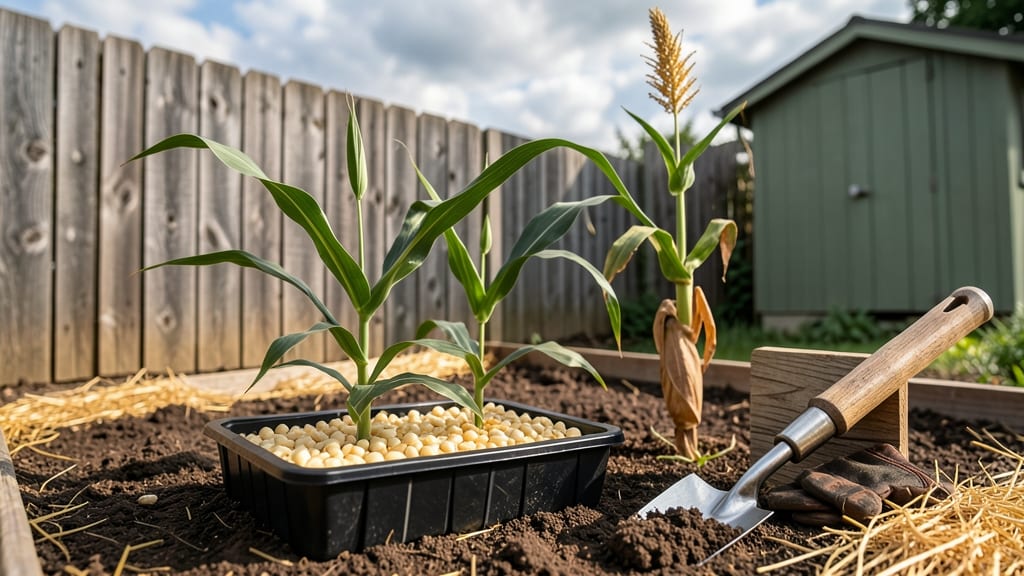
If you're asking "when can I plant corn in Zone 7", timing is everything—because those sweet, juicy 🌽 ears won't develop if you miss the window.
In Zone 7 (7a-7b), your best bet is mid-April to early May, right after the last frost date, when soil temps hit a steady 60°F.
Planting too early risks frost damage, while waiting too long cuts harvest season short. I'll show you how to calculate your exact planting window, whether to start seeds indoors or sow directly, and how to adjust for microclimates that might be warmer or cooler than average.
You'll also discover the best corn varieties for Zone 7, how to prep your soil for maximum germination, and why spacing matters more than you think. Let's get those kernels growing strong!
Whether you're a first-time gardener or a seasoned pro, these tips will help you avoid common mistakes and enjoy a bountiful harvest from late summer through early fall. Ready to dig in?
Zone 7 corn planting timeline: exact weeks before last frost for best results
Planting corn in Zone 7 requires precision—your last frost date (typically mid-April) sets the stage for a successful harvest. Corn thrives when soil temperatures hit 60°F+, which usually aligns with 2-3 weeks after your last frost.
For Zone 7, this means aiming for late April to early May for most varieties.
Miss this window, and you risk stunted growth from cool soils or late-season frosts that can damage tender seedlings. But don’t stress—corn’s 60-120 day maturity range gives you flexibility to choose early, mid, or late-season varieties to extend your harvest from July to September.
Here’s the golden rule: Plant when your soil is warm enough (test with a soil thermometer) and nighttime temperatures stay above 50°F.
In Zone 7, this usually means waiting until after Mother’s Day in most areas, but always verify your local microclimate—valleys and low spots frost later!
| Stage | Action | Zone 7 Timeline |
|---|---|---|
| Soil Prep | Test soil temp & pH | Late March - Early April |
| Planting Window | Direct sow seeds | Late April - Early May |
| Germination | Keep soil moist | 7-14 days (soil 60°F+) |
| Harvest Ready | Silks brown, kernels milky | Late July - September |
| First Frost Risk | Protect tender plants | Mid-October |
For early-season varieties (like 'Early Sunglow'), you can push planting to late March if you use row covers to protect seedlings. These varieties mature in 60-70 days, giving you July harvests even with a late start. Just be ready to cover plants if frost threatens!
If you prefer late-season sweet corn (like 'Silver Queen'), plant in early May for a September harvest. These varieties need 90+ days to mature, so timing is critical to avoid early fall frosts.
Always check your frost-free days (Zone 7 has ~165 days) when selecting varieties.
Pro tip: Use a planting calendar or local agricultural extension service to pinpoint your exact last frost date. In Zone 7, this can vary by 1-2 weeks depending on elevation and proximity to water bodies.
For example, Atlanta (Zone 7b) typically sees its last frost around April 15, while Raleigh (Zone 7a) may wait until April 22.
Don’t forget to space your planting in 2-week intervals for a continuous harvest. This works especially well for succession planting in Zone 7’s long growing season.
For example, plant one block in late April, another in early May, and a final block in mid-May to enjoy corn from July through August.
One common mistake is planting too early and risking frost damage or poor germination in cold soils. Corn seeds won’t sprout below 50°F, and seedlings can’t tolerate temperatures below 40°F. Always wait until your nighttime lows stay above 50°F consistently.
For reliable results, mark your calendar for 2-3 weeks after your last frost and test your soil temperature with a thermometer. If it’s below 60°F, wait another week—your corn will thank you with stronger stalks and sweeter ears!
Zone 7 corn planting timeline: exact weeks before last frost for best results
In Zone 7, your corn planting window hinges on two critical factors: soil temperature and your last frost date. Aim to plant 2-3 weeks after your average last frost—typically mid-April to early May—when soil reaches a steady 60°F.
This timing ensures strong germination and avoids frost damage to tender seedlings.
Corn thrives on warm soil, so test temperatures with a soil thermometer. If nights still dip below 50°F, wait a week or use row covers for protection. Remember, corn won’t germinate well in cold soil, so patience pays off for a better harvest.
🌱
| Stage | Action | Timeframe |
|---|---|---|
| Soil Prep | Test soil temp, add compost | Late March |
| Planting | Direct sow 1-1.5" deep, 4-6" apart | Mid-April to early May |
| Germination | Keep soil moist, watch for sprouts | 7-14 days |
| Thinning | Remove weak seedlings, leave strongest | 3-4 weeks after planting |
| Harvest | Pick when silks brown, kernels milky | July-September |
For early varieties like 'Golden Bantam', you can plant as soon as soil warms to 55°F (around late March). Standard varieties like 'Silver Queen' prefer the mid-April window, while late-season types like 'Peaches and Cream' can handle early May planting for a fall harvest.
Pro tip: Use a planting calendar or local frost date tracker (like Almanac’s Frost Calculator) to fine-tune your schedule. In Zone 7a, aim for May 1 as your cutoff—any later and you risk ears forming too close to frost.
Corn needs 60-90 days to maturity, so count backward from your first frost date (mid-October in Zone 7) to determine your latest planting window. For example, a 75-day variety planted on June 15 might still produce ears before frost, but yields will be smaller.
🌽☀️