
Watering
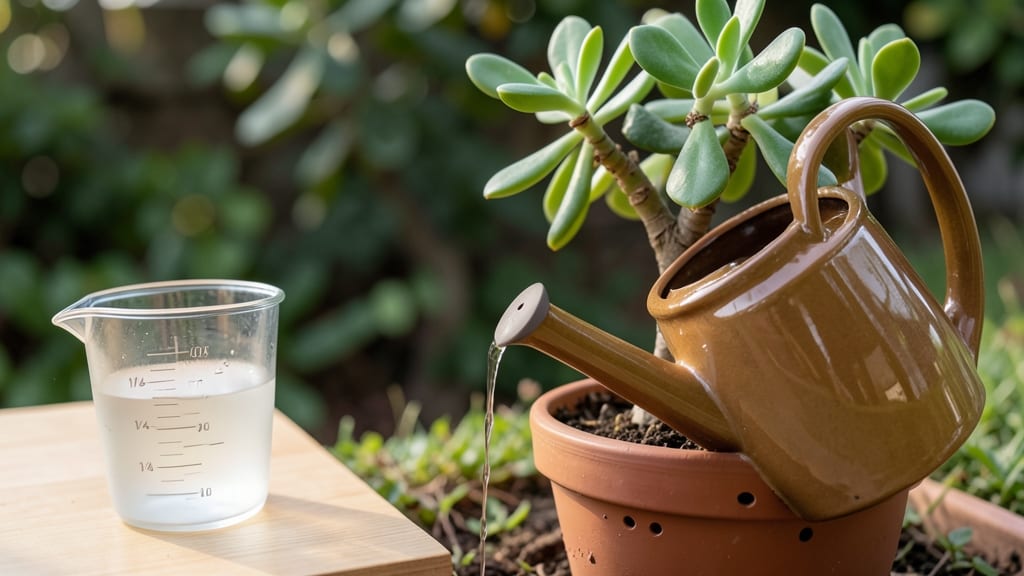
The exact answer to "jade plant how much water" might surprise you—because your instincts are probably wrong. Most people drown their jade plants 🌿 with good intentions, but this drought-loving succulent thrives on neglect, not TLC. The key isn't a rigid schedule but understanding when the soil is truly dry enough.
Here's the reality: your jade plant stores water in its thick leaves, meaning it can go weeks without a drink in cooler months. That said, overwatering kills faster than underwatering, and the line between "just right" and "too much" is thinner than you think.
We'll break down the science-backed watering rhythm that keeps your plant plump and healthy year-round—no guesswork required.
What you'll discover is how to read your plant's signals (like wrinkled leaves or dry soil) and adjust your watering like a pro. Whether you're battling dry air in winter or scorching summer heat, these tips will save your jade from becoming a sad, mushy mess.
Let's get your watering game on point.
From seasonal adjustments to the right tools for the job, I'll share the exact methods I've used to keep my own jade plants thriving for over a decade. No more second-guessing—just confident care that keeps your plant happy and growing.


Jade plant watering schedule by season: the exact frequency chart
Jade plants (Crassula ovata) thrive on a strict watering schedule that changes with the seasons. Unlike thirsty houseplants, these succulents store water in their thick leaves, making them drought-tolerant but vulnerable to root rot when overwatered.
My first jade plant died from well-meaning daily watering—don’t make the same mistake!
Here’s the key rule: Water only when the top 2-3 inches of soil are completely dry. Stick your finger in the soil—if it feels damp, wait.
If it’s bone-dry, it’s time. Seasonal shifts in temperature and light dramatically alter how often you should water, so let’s break it down by month.
🌱 Pro Tip: Use a pot with drainage holes and cactus/succulent mix soil to mimic their natural arid habitat. Terracotta pots help wick away excess moisture faster than plastic.
| Season | Frequency | Soil Test | Notes |
|---|---|---|---|
| Spring (March-May) | Every 2-3 weeks | Top 2" dry | Increase water as temps rise; new growth needs hydration. |
| Summer (June-Aug) | Every 3-4 weeks | Top 3" dry | Reduce watering if in direct sun; heat dries soil faster. |
| Fall (Sept-Nov) | Every 3-4 weeks | Top 2-3" dry | Transition period; monitor for wrinkled leaves (underwatering sign). |
| Winter (Dec-Feb) | Every 4-6 weeks | Top 4" dry | Dormancy mode! Water sparingly—even once every 6 weeks may be enough. |
Pot size dramatically affects watering needs. A 6-inch pot may need water every 3 weeks in summer, while a 12-inch pot could go 5-6 weeks. Larger pots hold moisture longer, so adjust accordingly.
I repotted my jade into a bigger container last year and nearly drowned it—now I wait twice as long between waterings!
Light exposure also plays a role. A jade plant in a south-facing window (6+ hours of sun) will dry out faster than one in a north-facing spot. If your plant’s leaves start looking pale or stretched, it’s not getting enough light—and may need less water, not more.
Think of sunlight as the thermostat for your plant’s hydration needs.
Humidity matters too! If your home has low humidity (common in winter with heaters running), your jade plant will dry out faster. In these cases, water slightly more frequently but still follow the soil-dry rule. A quick fix? Place a pebble tray with water nearby to boost humidity without overwatering.
Finally, never water on a schedule. Always check the soil first! I’ve seen gardeners set calendar reminders for their jade plants—big mistake. Instead, use the finger test or a moisture meter (more on tools in the next section).
Your jade plant will thank you with thick, glossy leaves and decades of loyalty.
💧 Key Takeaway: Spring = water every 2-3 weeks, Summer = every 3-4 weeks, Winter = every 4-6 weeks. Adjust for pot size, light, and humidity—but always let the soil dry completely between waterings.
Jade plant watering schedule by season: the exact frequency chart
Your jade plant's watering needs shift dramatically with the seasons, so a one-size-fits-all approach won't work. In spring and fall, when growth is active but not extreme, water every 2-3 weeks. This matches the plant's natural rhythm of storing moisture for drier periods.
The key is letting the top 2-3 inches of soil dry out completely before watering again—this prevents soggy roots while keeping leaves plump.
During summer's peak heat, your jade plant enters a semi-dormant state. Despite the sun, water only every 3-4 weeks because the intense light actually helps the plant conserve moisture. Think of it like a desert cactus—it's built to handle dry spells.
If you notice leaves starting to wrinkle slightly, that's your plant's way of asking for a drink, not a drowning.
Winter is when most people overdo it. Your jade plant needs minimal watering every 4-6 weeks because cooler temps and shorter days slow metabolism. Overwatering now is a fast track to root rot.
Place the pot on a pebble tray with water instead—this adds humidity without soggy soil. The goal is to mimic the plant's natural winter dormancy period.
| Season | Watering Frequency | Soil Test | Key Adjustments |
|---|---|---|---|
| Spring | Every 2-3 weeks | Top 2-3" dry | Increase sunlight |
| Summer | Every 3-4 weeks | Top 3-4" dry | Reduce watering |
| Fall | Every 3-4 weeks | Top 2-3" dry | Prepare for dormancy |
| Winter | Every 4-6 weeks | Top 4-5" dry | Minimal watering |
Pot size matters more than you think. A 6-inch pot may need water every 3 weeks, while a 10-inch pot can go 5-6 weeks between waterings. The larger the container, the longer the soil stays dry.
Always use a pot with drainage holes—this isn't negotiable. If you're using decorative pots without holes, place them in cache pots with gravel at the bottom to prevent waterlogging.
Environmental factors like humidity and light exposure also affect watering. In dry climates or near heaters, your jade plant will need water slightly more often. Conversely, in humid basements or bathrooms, extend the time between waterings by 1-2 weeks.
The key is always checking the soil—stick your finger 1-2 inches deep. If it feels dry, it's time to water.
Remember, your jade plant's leaves are its water storage system. If they start to pucker slightly, that's normal and means it's ready for a drink. But if they turn yellow or mushy, you've waited too long—or worse, overwatered.
The goal is to keep leaves firm and slightly wrinkled, not swollen like a water balloon. Trust the plant's natural signals over a calendar schedule.