
Plants
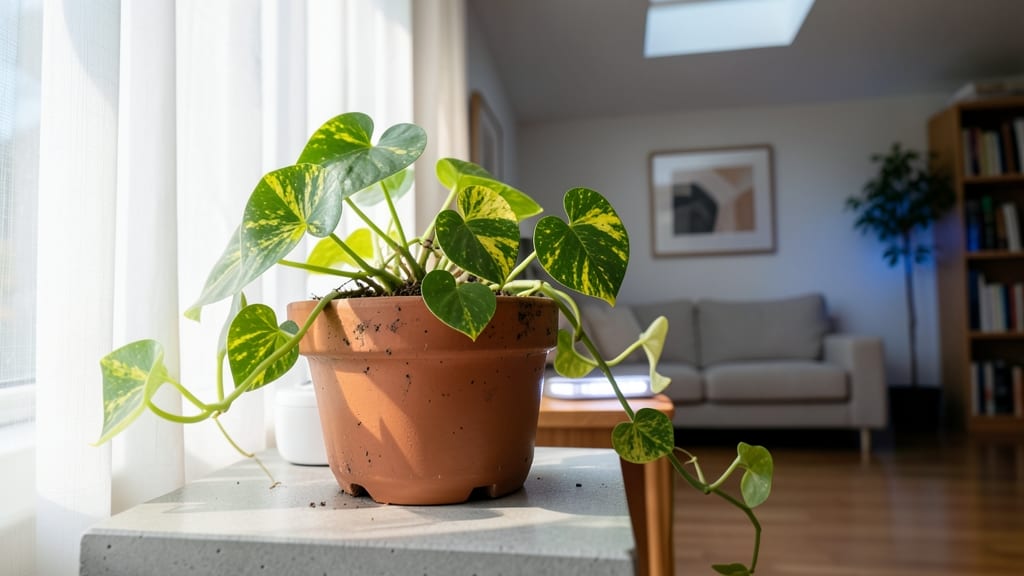
If your Pothos 🌿 plant is struggling with yellow leaves, slow growth, or leggy vines, how much light does a Pothos plant need might be simpler than you think—light exposure is the game-changer most people overlook.
Unlike finicky houseplants, Pothos thrives in conditions many of us already have at home, yet even small mistakes can turn your lush green friend into a sad, struggling survivor.
Here’s the truth: your Pothos doesn’t need much light, but it does need the right kind. Bright indirect sunlight is ideal, but even low-light spots can work—if you know the secrets.
I’ve helped countless plants bounce back from light-related stress, and the fixes are often easier than you’d expect, whether you’re dealing with a dim office corner or a sun-drenched kitchen.
You’ll discover exactly how much light your Pothos can handle, from low-light tolerance to the brightest spots it can safely enjoy.
Plus, I’ll show you how to spot the subtle signs of too much (or too little) light before it’s too late—and how to adjust your plant’s environment in just a few simple steps.
Ready to give your Pothos the perfect lighting setup? Let’s turn those brown tips into vibrant green growth—no guesswork required.

Pothos light requirements: the ideal spectrum for healthy growth
If you’ve ever wondered, "how much light does a pothos plant need," you’re not alone. Pothos (Epipremnum aureum) is famously adaptable, but its light needs are often misunderstood.
Unlike sun-loving plants, pothos thrives in low to bright indirect light, making it perfect for homes with limited natural sunlight. The key is finding that sweet spot—too little light leads to leggy growth, while too much can scorch its delicate leaves.
Most pothos plants do well with 4 to 6 hours of bright, indirect sunlight daily. This could be a spot near a north- or east-facing window, where harsh afternoon sun is filtered naturally.
If your home lacks natural light, don’t worry—pothos can also adapt to artificial lighting, like fluorescent or LED grow bulbs, for 8-12 hours a day. The goal is to mimic its natural understory habitat in tropical forests.
Here’s the breakdown: low light (under 2 hours of indirect light) will stunt growth, while direct sunlight (especially after 10 AM) can cause brown leaf tips or crispy edges. The ideal scenario is a balance—think dappled shade on a forest floor.
Even a well-lit bathroom or office with a window can work if you rotate the plant occasionally for even exposure.
🌿
Pothos Light Requirements Summary
| Light Type | Ideal Conditions | Signs of Stress | Solution |
|---|---|---|---|
| Low Light (<2 hrs indirect) | Leggy stems, sparse leaves | Pale green leaves, slow growth | Move to brighter spot or add grow lights |
| Bright Indirect (4-6 hrs) | Healthy, glossy leaves | None (ideal conditions) | Rotate plant weekly for even growth |
| Direct Sunlight (>2 hrs) | Brown leaf tips, crispy edges | Sunburnt patches, yellowing | Move to filtered light or sheer curtain |
One common misconception is that pothos can thrive in any light condition. While it’s true they’re resilient, pushing them to extremes—like a dark closet or a south-facing window—will eventually cause problems.
For example, a pothos in a north-facing window might grow slowly but stay healthy, while one in a south-facing window without protection will suffer from sun damage. Test different spots by moving your plant incrementally and observing changes over 2-3 weeks.
If you’re working with artificial lighting, opt for full-spectrum LED grow bulbs placed 6-12 inches above the plant. These mimic natural light and can keep your pothos thriving even in windowless offices.
Aim for 10-12 hours of artificial light daily if natural light is scarce. Fluorescent bulbs (like T5s) are also effective but may require closer placement (3-6 inches) for optimal results.
Pro tip: Watch your pothos’ leaves—they’re the best barometer. Healthy leaves are deep green with variegated yellow or white (depending on the variety). If the variegation fades to all green, it’s craving more light.
Conversely, if the edges turn brown or crispy, it’s getting too much direct sun. Adjust gradually to avoid shocking the plant.
For those in apartment living with limited space, pothos is a lifesaver. It’s happy hanging from a shelf, trailing over a desk, or even tucked into a corner with a small grow light.
The key is consistency—whether natural or artificial, stable light exposure is more important than intensity. With the right conditions, your pothos can grow vigorously for years with minimal fuss.
🪴
Signs your pothos isn’t getting the right light (and how to fix it)
Your Pothos 🌿 might look healthy at first glance, but subtle clues reveal whether it’s getting the right amount of light.
One of the first red flags is leggy stems—those long, bare sections between leaves mean your plant is stretching toward any available light source, a classic sign of low-light stress.
This happens when your pothos receives less than 2 hours of indirect light daily, causing it to grow tall and weak in search of sunlight.
Another common issue is yellow leaves, which can indicate either overwatering or—you guessed it—light problems. If the yellowing starts at the bottom of the plant and the soil feels soggy, it’s likely a watering issue.
But if the yellowing appears along the edges or the leaves feel papery, your pothos is probably getting too much direct sunlight. This causes leaf burn, where the plant’s delicate cells dry out and crisp up from excessive UV exposure.
🌿
⚠️ Warning: Don’t Ignore These Light-Related Symptoms
Leggy growth: Stems stretch >12" between leaves → Move to brighter spot or add grow lights.
Brown leaf tips: Crispy edges from direct sun → Use sheer curtains or relocate to indirect light.
Pale variegation: Yellow patterns fade to all green → Increase light exposure gradually.
Slow growth: Tiny new leaves, weak stems → Rotate plant for even light distribution.
If your pothos develops brown spots that aren’t crispy but rather mushy, this could signal fungal issues from poor air circulation—often worsened by low light weakening the plant. In this case, improve airflow by trimming nearby plants or using a small fan (set to gentle breeze).
For variegated pothos varieties (like 'Golden Pothos' or 'Marble Queen'), watch for loss of color. When the yellow or white patterns disappear, it’s a clear cry for more light.
Fixing light-related issues starts with small adjustments. If your pothos is in low light, try moving it closer to a window—even just 6-12 inches nearer can make a difference.
For too much direct sun, place it behind a sheer curtain or rotate it quarter-turns weekly to balance exposure. Artificial grow lights are a game-changer for windowless rooms: position a full-spectrum LED bulb 6-12 inches above the plant and run it for 10-12 hours daily.
Pro tip: Prune leggy stems to encourage bushier growth. Cut just above a leaf node (where leaves grow), and the plant will redirect energy to new, stronger stems. This not only improves appearance but also helps your pothos recover from light deprivation.
With the right fixes, your plant can bounce back in as little as 4-6 weeks, regaining its vibrant, healthy glow.
🪴