
Plants
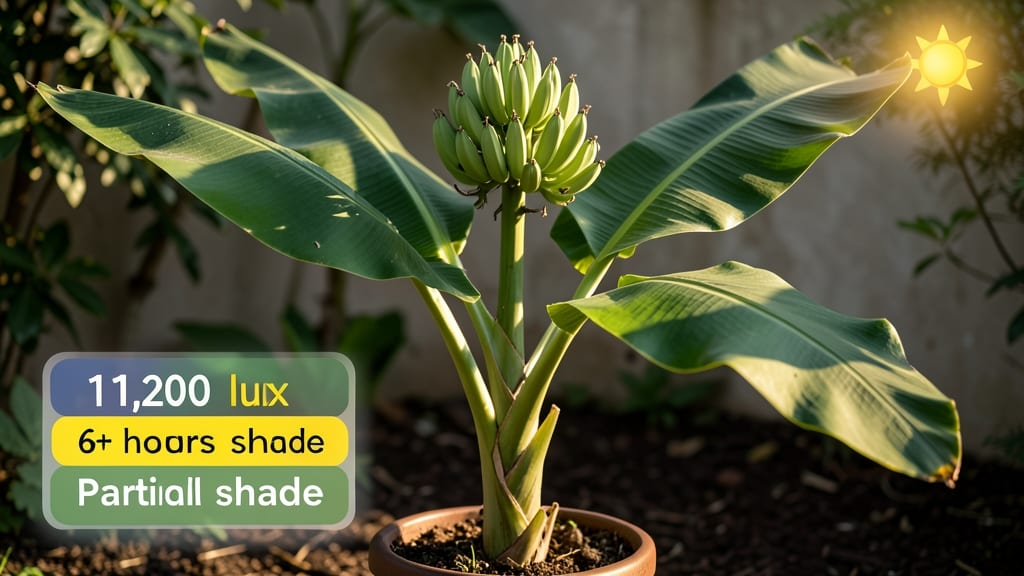
If you’ve ever wondered why your 🍌 banana plant grows slowly or looks sad despite your best care, the answer might be hiding in its light needs.
This tropical beauty thrives in bright conditions, but too much direct sun can scorch its leaves while insufficient light stunts its growth—leaving you with a plant that’s all show and no fruit.
Most gardeners assume banana plants need full sun, but the truth is more nuanced. In their natural General (Tropical/Subtropical) habitats, they bask in dappled sunlight filtered through trees, giving them the perfect balance of light without harsh exposure.
Recreating this environment is key to keeping your banana plant happy, whether you’re growing it outdoors in zones 10-12 or indoors near a sunny window.
In this guide, I’ll break down exactly how much light your banana plant needs—6-8 hours of bright indirect sunlight—and how to spot signs of light stress, like yellowing leaves or slow growth.
You’ll also discover practical tips for adjusting light exposure, whether you’re dealing with a scorching afternoon sun or a dim corner that’s not cutting it.
Ready to give your banana plant the ideal lighting conditions? Let’s dive into the secrets that’ll transform your 🍌 from struggling to stunning—so you can enjoy lush leaves and sweet fruit all year round.

Understanding banana plant light requirements: bright indirect sunlight explained
Banana plants, native to tropical regions, crave bright indirect sunlight to thrive, but their exact needs depend on your climate. In their natural habitat, they grow under dappled canopy light, receiving 6-8 hours of filtered sun daily.
This balance prevents leaf scorch while fueling robust growth and fruit development.
For gardeners in USDA zones 10-12, banana plants can handle direct morning sun followed by afternoon shade, especially in scorching climates. In cooler zones, they may need supplemental grow lights during winter months to maintain their energy needs. Understanding these nuances is key to avoiding common light-related issues.
| Light Requirement | Specification |
|---|---|
| Daily Sunlight | 6-8 hours of bright indirect light |
| Ideal Light Type | Morning sun + afternoon shade |
| Tropical Zones | Direct sun with afternoon protection |
| Cooler Zones | Grow lights (12-14 hrs/day in winter) |
| Danger Zone | Direct afternoon sun or deep shade |
In tropical climates, banana plants naturally receive filtered sunlight through dense foliage, which mimics the bright indirect light they prefer. If you're growing them outdoors in hot zones, position them where they get morning sun (6 AM–12 PM) and afternoon shade (1 PM–6 PM) to prevent leaf burn.
This schedule mimics their native environment and promotes healthier growth.
For temperate zones, where sunlight is less intense, banana plants can tolerate more direct sun, but 6-8 hours of bright light is still ideal. If your plant starts showing signs of pale or yellowing leaves, it’s likely not getting enough light.
In these cases, consider moving your plant to a sunnier spot or supplementing with a grow light during shorter winter days.
One common misconception is that banana plants need full, unfiltered sun like desert plants. In reality, their large leaves are sensitive to intense midday rays, which can cause sunburn and brown patches.
To protect your plant, use lightweight shade cloth (30-50% coverage) during peak sun hours if you notice leaf discoloration or crispy edges.
If you're growing banana plants indoors, place them near south- or east-facing windows where they can receive maximum natural light. A south-facing window provides the most consistent light, while an east-facing window offers gentler morning sunlight.
Rotate your plant quarter-turns every few days to ensure even growth, as banana plants tend to lean toward the light source.
Seasonal adjustments are crucial, especially in cooler months. When daylight hours drop below 10 hours, your banana plant may enter a dormant phase or show signs of slow growth.
To combat this, use a full-spectrum grow light for 12-14 hours per day to mimic longer tropical days. LED grow lights are energy-efficient and ideal for indoor banana plant care.
Another pro tip: Pay attention to your banana plant’s leaf color and size. Healthy leaves should be deep green and broad, indicating they’re receiving the right amount of light. If leaves are narrow and pale, your plant needs more light.
Conversely, yellow or brown patches signal too much direct sun or heat stress. Adjusting their location or providing afternoon shade can resolve these issues quickly.
For container-grown banana plants, ensure they’re placed in a well-ventilated area with optimal light exposure. Since pots have limited root space, they may dry out faster and require more frequent watering—but always pair this with the right light conditions.
A balanced approach of bright indirect light, consistent moisture, and proper airflow will keep your banana plant thriving year-round.
Remember, banana plants are forgiving but sensitive to light extremes. By providing 6-8 hours of bright indirect sunlight, protecting them from harsh afternoon sun, and adjusting for seasonal changes, you’ll set your plant up for lush foliage, strong stems, and delicious fruit.
With the right light, your banana plant can become a stunning tropical centerpiece in any garden or home.
Signs your banana plant isn’t getting enough (or too much) light
Your 🍌 banana plant communicates its light needs through subtle (and sometimes not-so-subtle) clues. If the leaves start turning yellow, especially along the edges, it’s a classic sign of too much direct sunlight or underwatering.
This is often called sunburn, where the intense rays damage the delicate leaf tissue. I’ve seen this happen when gardeners place their banana plants in full afternoon sun without any protection.
On the flip side, pale or limp leaves and slow growth scream for more light. When banana plants don’t get enough bright indirect sunlight, they stretch toward the nearest source—a condition called etiolation.
This results in weak stems and sparse foliage, which can make your plant look more like a sad houseplant than a tropical giant. I once had a banana plant that grew so leggy indoors it nearly toppled over!
🚨 WARNING: Here’s what to watch for—yellowing leaves can also signal overwatering, so always check the soil moisture before blaming the light. But if the yellowing is paired with brown crispy edges, it’s almost certainly a sunburn issue.
In my experience, banana plants in USDA zones 10-12 handle morning sun beautifully but need afternoon shade during peak summer months.
🚨 Light Stress Red Flags
- Too Much Light: Brown crispy leaf edges, white/yellow patches
- Too Little Light: Pale leaves, leggy growth, sparse foliage
- Both Issues: Yellowing leaves (check soil first!)
💡 Pro Tip: Rotate your plant weekly for even growth and prevent sunburn on one side.
If your banana plant’s leaves develop white or yellow patches that feel rough to the touch, it’s definitely suffering from sun scald. This often happens when plants are suddenly moved from shade to full sun.
To fix this, move your plant to a spot with filtered sunlight or use a sheer curtain to diffuse harsh rays. For indoor plants, a south- or east-facing window is ideal—just keep them 2-3 feet away to avoid overheating.
For indoor growers, grow lights can be a game-changer. A full-spectrum LED grow light placed 12-18 inches above the plant for 12-14 hours daily mimics natural sunlight perfectly.
I’ve used these successfully in my basement greenhouse during winter when natural light is scarce. The key is to gradually increase light exposure to avoid shocking the plant.
Remember, banana plants are tropical trees that naturally grow under the canopy of other plants. Recreating this environment—whether through dappled shade outdoors or artificial lighting indoors—is the secret to keeping them thriving year-round.
Pay attention to these signs, and your banana plant will reward you with lush green leaves and eventually, sweet fruit.