
Plants
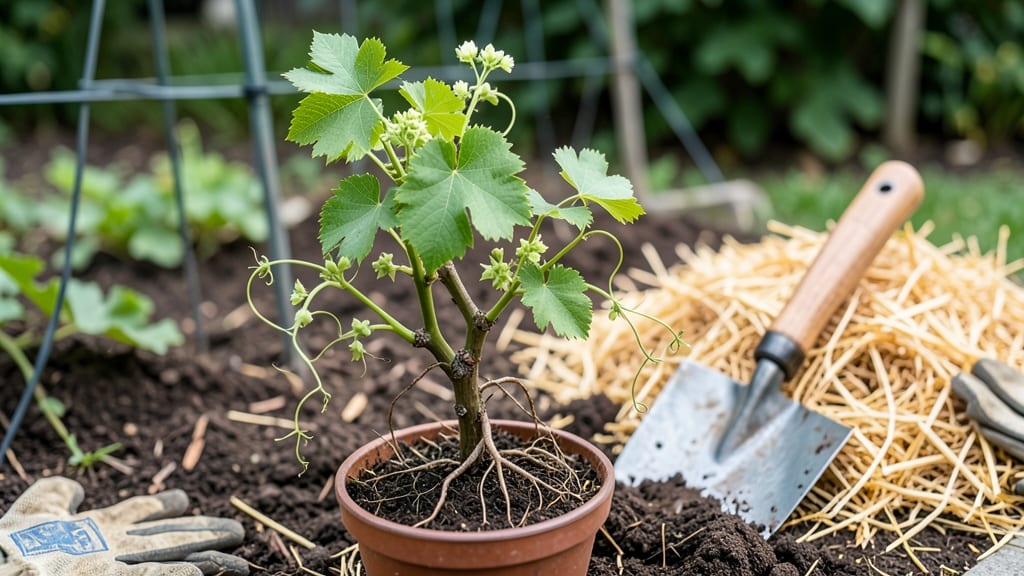
Planting your 🍇 grape vine in Illinois at the wrong time can mean weak roots and fewer grapes—even if you pick the perfect variety.
The key isn't just avoiding frost; it's waiting for soil temperatures to hit 50-60°F, which gives those delicate roots the best shot at thriving in zones 5-6.
Most gardeners in Illinois rush to plant in early spring, but that can backfire if the ground is still too cold. I’ve seen firsthand how a 2-week delay can mean the difference between a struggling vine and one that bursts with growth by summer.
Timing matters just as much as soil prep.
Whether you’re planting bare-root vines in April-May or dormant canes in September-October, I’ll show you how to read your soil’s temperature cues and adjust for Illinois’ unpredictable weather. No more guessing—just stronger roots and sweeter harvests.
Ready to skip the trial-and-error? Let’s dive into the exact soil tricks that’ll set your 🍇 grape vine up for success, no matter what Mother Nature throws your way this season.
Best planting months for grape vines in Illinois based on hardiness zones
Illinois spans USDA Zones 5-7, which means your grape vine planting window depends on where you live. Most gardeners in northern Illinois (Zone 5) should aim for late April to early May, while those in central/southern Illinois (Zones 6-7) can plant as early as mid-March to April.
Fall planting is also ideal in September-October for root establishment before winter.
Timing isn't just about the calendar—it's about soil temperatures. Grape vines thrive when soil reaches 50-60°F—a critical threshold for root growth. In Illinois, this typically aligns with after the last frost date, which averages April 15 in most regions.
Planting too early risks frost damage, while waiting too long delays root development.
For bear-root vines, early spring planting (March-April) gives roots 6-8 weeks to establish before summer heat. Dormant canes planted in fall (September-October) benefit from winter chill requirements, especially for cold-hardy varieties like Concord or Niagara. Always check your local frost-free date—Illinois' varies by 10-14 days across regions.
Here’s how Illinois’ zones break down for optimal planting:
| Zone | Spring Planting Window | Fall Planting Window | Soil Temp Goal (°F) | Key Varieties |
|---|---|---|---|---|
| 5 (Northern IL) | Late April–Early May | Early–Mid September | 50–55°F | Concord, Niagara, Marquette |
| 6 (Central IL) | Mid–Late April | Mid–Late September | 55–60°F | Catawba, Valvin Muscat |
| 7 (Southern IL) | Early–Mid March | Late September–Early October | 60°F+ | Champagne, Flame Seedless |
If you’re in Zone 5, wait until after May 1 to plant—early April frosts are common. For Zones 6-7, early March planting is risky unless you use row covers or black plastic mulch to warm the soil faster. Always monitor weekly soil temps with a thermometer for accuracy.
Pro tip: Fall-planted vines often outperform spring-planted ones in Illinois because they establish roots before winter dormancy. Aim to plant 4-6 weeks before the first hard frost (usually October 15), giving roots time to anchor before cold sets in.
For container growing, extend your planting window by 2-3 weeks earlier in spring or 1-2 weeks later in fall. Containers warm up faster in spring and cool down quicker in fall, so adjust your schedule accordingly. Always use well-draining potting mix with 50% compost to mimic ideal soil conditions.
One common mistake? Planting too late in spring (after mid-May). Vines planted in June or July struggle to establish roots before summer heat, leading to poor yields or winter dieback. Stick to the April-May or September-October windows for best results.
Finally, consider microclimates—southern exposures or urban areas may warm up 1-2 weeks earlier than rural zones. Use a soil thermometer ($15 at garden centers) to confirm readiness before planting. This small tool can save your vines from root shock or frost damage.
Ready to plant? Grab your grape vine, soil thermometer, and compost—Illinois’ growing season is waiting! 🍇
Soil temperature secrets: how to test and prepare for grape vine planting
Testing your soil temperature before planting grape vines in Illinois isn’t just smart—it’s essential. I’ve learned the hard way that planting too early, when the ground is still chilly, can stunt root growth and leave your vines vulnerable to disease.
The ideal soil temperature for grape vines is between 50-60°F, giving roots the perfect kickstart to establish before summer heat arrives.
A simple soil thermometer (just $10 at any garden center) is your best friend here. Stick it 6 inches deep—that’s where grape vine roots will settle—and check it in the morning for 3 consecutive days.
If it’s consistently above 50°F, your vines are ready to go. Pro tip: Spring soil warms slower in Illinois, so don’t rush—wait for that steady climb.
🌱
Planting grape vines in soil below 50°F can cause root rot or delayed growth. Illinois’ Zone 5-6 springs often see late frosts—wait for consistent warmth before digging.
Preparing your soil isn’t just about temperature—it’s also about texture and nutrients. Grape vines thrive in well-draining soil with a pH of 6.0-6.5. If your soil is heavy clay (common in Illinois), mix in 2-3 inches of compost or aged manure to improve drainage.
A quick soil test kit (available at local extension offices) will tell you if you need to adjust pH with lime (to raise pH) or sulfur (to lower it).
For fall planting (another great option in Illinois), aim for 6-8 weeks before the first frost—typically September-October. The soil stays warmer longer in fall, giving roots time to settle before winter dormancy. Just like in spring, test temperatures first—55-60°F is ideal for fall plantings.
One trick I swear by? Mulching after planting. Spread 3-4 inches of straw or wood chips around the base of your vine (but keep it 6 inches away from the trunk to prevent rot). This helps regulate soil temperature, retains moisture, and suppresses weeds—three wins in one! Just
If you’re planting in containers (a great option for urban gardeners or areas with poor soil), use a fast-draining potting mix with perlite or sand. Containers warm up faster than ground soil, so you can plant 1-2 weeks earlier in spring. Just ensure your pot has drainage holes and is large enough (at least 15-gallon capacity for mature vines).