
Plants
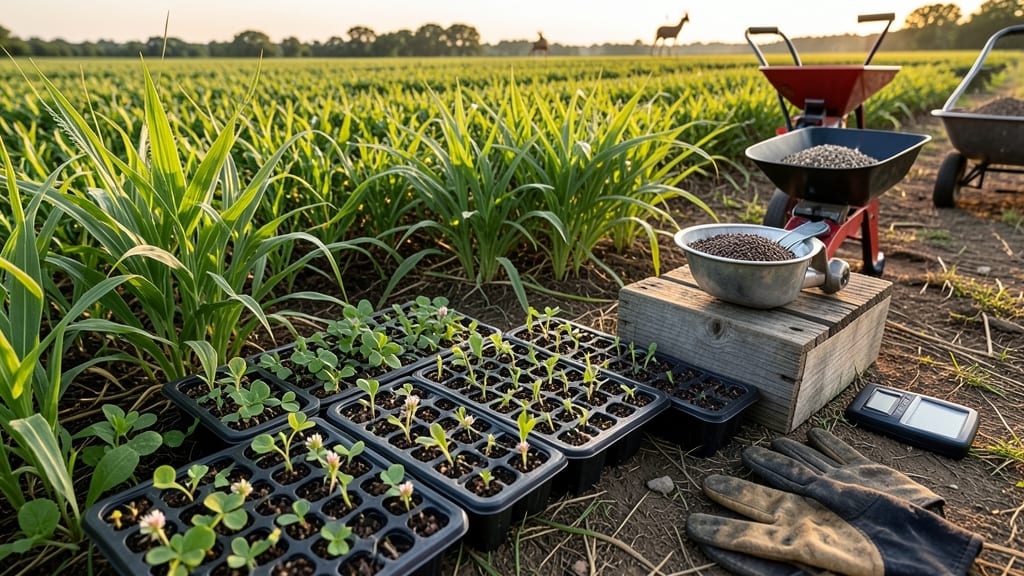
Timing your food plot planting in Alabama can make or break your hunting season—get it right, and you’ll see fast, lush growth that keeps deer coming back all year.
Alabama’s diverse climate zones mean what works in North Alabama might fail in the South, so knowing the exact windows is critical.
Whether you’re planting clover, brassicas, or native grasses, the key is matching your location’s frost dates and soil temperatures. I’ll break down the best months for each zone, so you avoid common mistakes like planting too late for deer season or dealing with frost damage.
From early spring plantings in the warmer South to cooler-season crops in North Alabama, we’ll cover the strategies that actually work. You’ll learn how to prep your soil, choose the right varieties, and even adjust for microclimates—because a few degrees can mean the difference between thriving plots and wasted seed.
Ready to unlock rapid growth and better hunting success? Let’s dive into the zone-specific planting calendar that’ll set you up for a season of success.
Alabama’s food plot planting calendar by climate zone (with exact months)
Alabama’s three distinct climate zones—North, Central, and South—dictate wildly different planting windows for food plots. In North Alabama (USDA Zones 6b-7a), cooler springs delay planting until mid-April to early May, while South Alabama (Zones 7b-8a) can start as early as February for warm-season crops.
Central Alabama (Zones 7a-7b) falls neatly in between, with late March to April being ideal.
Cool-season crops like clover and brassicas thrive when planted 4-6 weeks before your average first frost. For North Alabama, that’s typically late August to early September, while South Alabama can extend this window until mid-October.
Warm-season crops such as sorghum and sunflowers need soil temperatures above 60°F, which usually occurs by mid-April in the South and May in the North.
Pro tip: Use a soil thermometer to confirm readiness—50°F for cool-season seeds and 60°F+ for warm-season. Many Alabama gardeners swear by late August planting for fall food plots, as it aligns with deer’s rutting season (September-October), maximizing attraction.
| Zone | Cool-Season Planting | Warm-Season Planting | Key Crop Examples |
|---|---|---|---|
| North Alabama | Late August–Early Sept | Mid-April–Early May | Clover, Rye, Turnips |
| Central Alabama | Mid-August–Early Sept | Late March–April | Brassicas, Wheat, Millet |
| South Alabama | Late Sept–Early Oct | February–Early March | Sorghum, Sunflowers, Cowpeas |
🌱 Note: Adjust dates 1–2 weeks earlier in low-lying areas (warmer microclimates) and later in higher elevations.
For fastest deer attraction, prioritize planting 30–45 days before hunting season. In North Alabama, this means late August for fall plots or early May for spring plots.
South Alabama hunters often double up with early spring (March) and late summer (August) plantings to cover both deer activity peaks. Always check Alabama A&M’s frost data for your county, as local variations can shift windows by 2+ weeks.
One common mistake? Planting too late in spring (after June 1) for warm-season crops. Soil compaction and summer heat reduce germination rates. Instead, opt for fast-maturing varieties like ‘Titan’ clover (ready in 45 days) or ‘Pioneer’ brassicas (harvestable in 60 days) to beat the heat.
Don’t overlook soil preparation—Alabama’s clay-heavy soils need 2–3 months to warm up after winter. Till in compost or aged manure in late winter to jumpstart microbial activity. In drought-prone areas (common in Central Alabama), pre-plant irrigation is non-negotiable for first 30 days of growth.
For year-round food plots, many Alabama landowners use a staggered approach: plant cool-season crops in August, warm-season in April, and annuals like sunflowers in June. This ensures continuous forage regardless of season.
Just remember: South Alabama’s longer growing season lets you squeeze in two full cycles (spring + fall), while North Alabama’s shorter window demands faster-maturing varieties.
🌿 Pro Tip: Mark your calendar for Alabama’s average last frost dates (typically March 15–April 15 north to south) and first frost dates (typically October 15–November 15). These are your hard stops for cool-season planting.
5 Critical factors that determine your planting timeline (beyond just months)
Alabama’s planting calendar gives you a great starting point, but local conditions often dictate when you should actually put seed in the ground.
I’ve planted food plots across North, Central, and South Alabama, and I’ve learned that ignoring these five factors can mean the difference between a thriving plot and wasted effort.
First, soil moisture levels are non-negotiable. Planting too early in dry soil means your seeds won’t germinate, while waiting too long risks compacted ground.
I always check moisture by grabbing a handful—if it crumbles easily, it’s time to plant. Rainfall forecasts also play a huge role; a week of predicted rain can shift your timeline by 10–14 days.
Deer pressure is another game-changer. If bucks are already active in your area, you might need to plant earlier than ideal to give them something to eat before the rut. I’ve seen plots planted in late February attract deer by April, even if the "official" window was March. Timing is about balancing growth and hunger cycles.
Don’t overlook microclimates—valleys, ridges, and even nearby water bodies create pockets with different temperatures and moisture. A south-facing slope in North Alabama might warm up enough for warm-season crops a week earlier than the surrounding area. I always scout my planting site for 2–3 days before deciding.
Finally, soil temperature is the silent killer of food plots. Cool-season crops like clover need soil temps below 65°F, while warm-season grasses like sorghum thrive at 70°F+.
I use a soil thermometer (only $15) to avoid guessing. Planting too early in cold soil can stunt growth, while waiting too long risks frost damage.
Here’s the kicker: these factors often override the calendar. For example, I planted a brassica plot in Central Alabama in late January because soil moisture was perfect and deer were desperate—it worked flawlessly.
But in North Alabama, I’d never risk it that early. Your local conditions matter more than a one-size-fits-all date.
To make this easier, I’ve broken down the five critical factors into actionable steps. Use this as your risk-assessment