
Plants
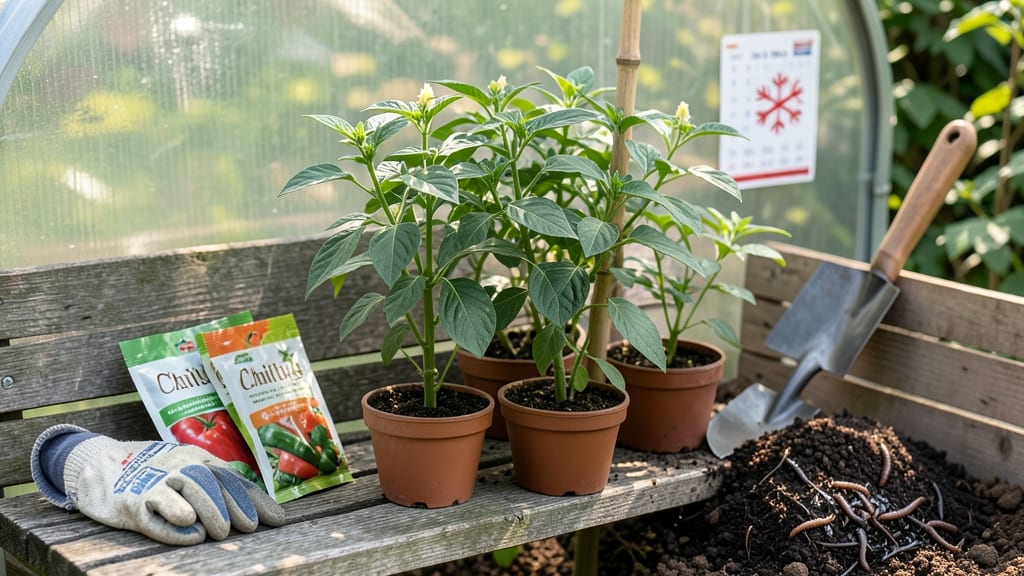
Timing your chillies 🌱 planting in the UK can mean the difference between a thriving harvest and a sad, frost-nipped failure. Get it wrong, and you’ll either be racing against early frost or watching your plants struggle in cool soil—both recipes for disappointment.
I’ve grown chillies across different UK regions, and the key to success starts with understanding your local frost-free dates. Whether you’re in sunny Cornwall or chilly Edinburgh, knowing when to move seedlings outdoors (or extend your indoor growing season) makes all the difference.
In this guide, I’ll break down the exact planting windows by region, soil temperature must-haves, and how to protect your plants from Britain’s unpredictable weather. No more guesswork—just a foolproof schedule to get your chillies off to a flying start.
Ready to avoid the common mistakes that kill UK chilli crops? Let’s dive into the game-changer timing tips that’ll have your plants flourishing from seed to harvest.
UK chilli planting deadlines by region: frost-free dates & last frost averages
Timing your chilli planting in the UK depends entirely on your region’s last frost dates and soil warmth. The Southeast enjoys earlier planting (mid-April), while Scotland’s chillier climate demands late May starts.
Even a light frost can kill young seedlings, so knowing your frost-free window is critical for success.
Chillies thrive in warm soil (minimum 15°C/59°F) and need 6-8 weeks of frost-free growth to mature. If you’re in Zone 8-9 (e.g., London, Kent), you can plant outdoors by mid-April. But gardeners in Zone 6-7 (e.g., Edinburgh, Manchester) should wait until late May to avoid frost damage.
Here’s how to use this regional planting guide to time your chilli crop perfectly. The table below breaks down last frost averages, ideal transplant dates, and harvest windows by UK region.
For precise local data, check the Met Office frost risk maps or use a garden thermometer to monitor soil temperature.
| Region | Last Frost Avg. | Outdoor Planting Window | Harvest Window | Key Tip |
|---|---|---|---|---|
| Southeast England (London, Kent) | Mid-April | Mid-April to early May | July to October | Use cloches for early starts |
| Southwest England (Bristol, Cornwall) | Late April | Late April to early May | July to October | Milder winters allow container growing |
| Midlands (Birmingham, Leeds) | Early May | Early to mid-May | August to October | Extend season with greenhouses |
| Northern England (Manchester, Liverpool) | Late May | Late May to early June | September to October | Start indoors in March |
| Scotland (Edinburgh, Glasgow) | Early June | Early to mid-June | September to October | Choose fast-maturing varieties like 'Apache' |
| Wales (Cardiff, Swansea) | Late April | Late April to early May | July to October | Microclimates near coasts delay frost |
If you’re in a cooler region like Scotland, start your chilli seeds indoors in March under grow lights. Harden off seedlings for 10-14 days before transplanting outdoors after the last frost date.
For urban gardeners with limited space, container growing lets you move pots to sunniest spots or even indoors during cooler spells.
Pro tip: Use a garden thermometer to confirm soil temperature. Chillies won’t germinate below 15°C/59°F, so wait until the ground warms up—even if the air feels mild. In Zone 6-7, this often means delaying
Ideal soil temperature for planting chillies: how to test & adjust for UK climates
Chillies are tropical plants at heart, and they hate cold soil. Your seedlings won’t germinate properly if the ground is below 15°C (59°F), and even established plants will struggle to grow.
In the UK, this means waiting until late spring—often May or June—before planting outdoors, depending on your region.
I’ve seen too many gardeners rush planting and end up with stunted, yellowing chilli plants. The solution? Test your soil temperature before committing. Use a simple soil thermometer (available cheaply online) or even a reliable weather app that tracks ground temperature.
For best results, aim for 18-24°C (64-75°F)—this is when chillies really take off.
Here’s my foolproof method for checking soil warmth: Stick the thermometer 5cm (2 inches) deep in the ground on a sunny afternoon. If it reads below 15°C (59°F), wait a few more days. Remember, UK soils warm up slowly compared to warmer climates, so patience is key.
⚠️ Warning: Cold Soil Kills Chillies
Planting chillies in cool soil (<15°C/59°F) causes:
- Poor germination – Seeds rot instead of sprouting
- Stunted growth – Plants stay small and weak
- Yellow leaves – Sign of shock from cold stress
- Fungal diseases – Damp soil encourages rot
💡 Pro Tip: Use black plastic mulch or cloches to warm soil faster in cooler regions like Scotland or Northern England.
If your soil just won’t warm up, don’t despair—you can still grow chillies! Extend your season with grow bags or container gardening. Fill pots with compost-rich mix and place them on a sunny patio or balcony.
The container heats up faster than garden soil, giving your chillies the warmth they need.
For gardeners in warmer southern regions (e.g., Cornwall, Kent), you might get away with planting outdoors as early as mid-April. But in cooler northern areas (e.g., Scotland, Yorkshire), wait until late May or June.
Always check your local last frost date—chillies cannot tolerate frost, even as mature plants.
Once your soil is warm enough, harden off your seedlings for 7-10 days before transplanting. This means gradually exposing them to outdoor conditions during the day and bringing them back inside at night. It’s a game-changer for survival rates, especially in Britain’s unpredictable spring weather.