
Plants
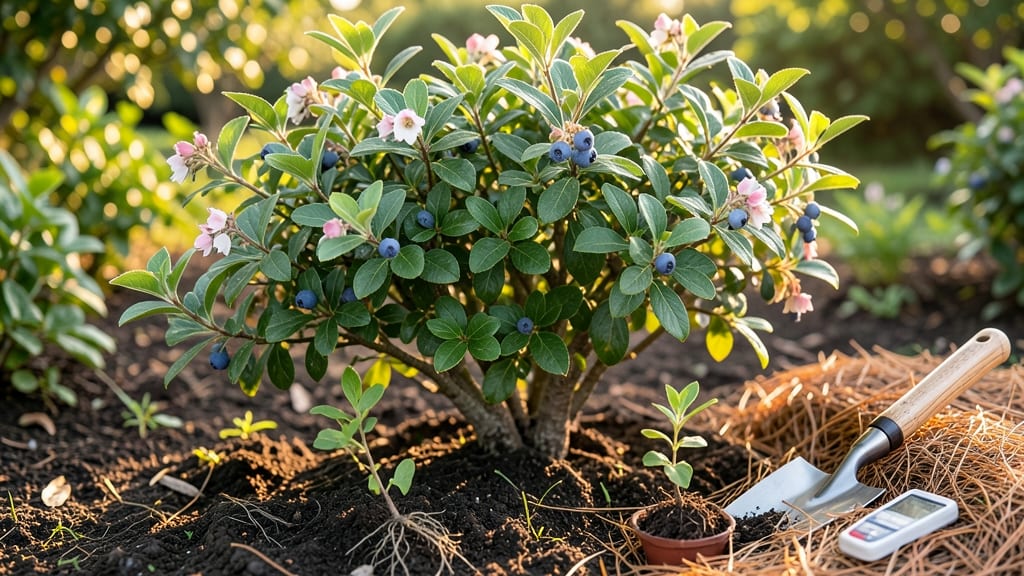
If you’ve ever dreamed of plucking fresh 🫐 blueberries straight from your Alabama backyard, when to plant blueberry bushes in Alabama is the key to success—or failure.
Planting a blueberry bush outside its ideal window in Alabama’s 7a-8b zones can mean sparse fruit, stunted growth, or even plant death, thanks to the state’s unique chill-hour demands and unpredictable frost patterns.
Most gardeners assume spring is the only time to plant, but in Alabama’s warm climate, that’s only half the story. The real window—late fall to early spring (October–March)—lets your blueberries establish roots before summer’s heat stress hits.
This is especially critical for varieties like Southern Highbush and Rabbiteye, which need just the right balance of cold to trigger fruiting.
I’ll break down exactly when to plant in North vs. South Alabama, how chill hours affect your choice of blueberry type, and why container planting might extend your window.
Whether you’re a first-time grower or a seasoned gardener, these insights will help you avoid common mistakes and set your bushes up for a bountiful harvest from May to July.
Ready to turn your yard into a blueberry paradise? Let’s dive into the perfect planting schedule tailored to Alabama’s climate quirks—so you can enjoy those sweet, juicy berries without the guesswork.
Best planting months for Alabama blueberries (Zone 7b-8a chill-hour guide)
Alabama’s mild winters and hot summers create unique challenges for blueberry growers. Unlike northern states, we can’t just plant in spring—our chill-hour requirements and heat tolerance demand precision timing.
The sweet spot? October through March, when temperatures stay cool enough for root establishment but warm enough to avoid frost damage.
Blueberries need 300-900 chill hours (below 45°F) to produce fruit. Alabama’s Zone 7b-8a climate means we must choose varieties that match our 350-500 chill hours range. Planting outside this window risks poor fruit set or no harvest at all.
For bare-root plants, aim for late fall (November-December) when soil is workable but before hard freezes. Container-grown bushes can go in early spring (February-March) once frost danger passes. Both timings give roots time to establish before Alabama’s sweltering summer heat arrives.
📅 Alabama Blueberry Planting Timeline
| Month | Best Planting Time | Soil Temp | Notes |
|---|---|---|---|
| October | Bare-root only | 50-60°F | Avoid if frost predicted |
| November | Bare-root ideal | 45-55°F | Mulch heavily |
| February | Container-grown | 55-65°F | Water deeply after |
| March | Best for containers | 60-70°F | Avoid late frosts |
⚠️ Pro Tip: Use mulch to protect roots from temperature swings in Alabama’s unpredictable winters.
North Alabama (Zone 7b) has slightly cooler winters, so you can push planting to early April if needed. South Alabama (Zone 8a) should finish by mid-March to avoid heat stress. Always check your local last frost date—Birmingham’s average is March 15, while Mobile’s is March 1.
Spring planting after March risks heat stress before roots establish. If you miss the fall window, container-grown bushes are your best bet—they adapt better to Alabama’s heat and can be planted through early May with extra care.
Container planting also extends your window if you live in urban heat islands (like Huntsville or Montgomery), where microclimates can be 5-10°F warmer than rural areas. Just ensure containers have drainage holes and use acidic potting mix.
After planting, water deeply (1-2 gallons per plant) and mulch with pine needles to maintain soil acidity. In Alabama’s humidity, fungal diseases like botrytis can be a problem, so avoid overhead watering after planting.
Remember: Rabbiteye varieties (like ‘Climax’) handle Alabama’s heat better than Northern Highbush types. If you’re in Zone 8a, stick with Southern Highbush cultivars that need 300-400 chill hours—they’re bred for our climate.
With the right timing and variety, your Alabama blueberry bushes can produce fruit for 20+ years—just don’t wait until summer to plant! 🌱
Best planting months for Alabama blueberries (Zone 7b-8a chill-hour guide)
Alabama’s mild winters and hot summers create a unique challenge for growing blueberry bushes. Unlike northern climates, you can’t just plant in early spring—chill hours (cold winter hours needed to set fruit) are critical.
Most Alabama regions (Zones 7b-8a) average 300-600 chill hours, so choosing the right planting window ensures your bushes thrive.
For bare-root plants, aim for late fall (October-November) or early spring (February-March).
Container-grown bushes can go in until April, but avoid planting in summer heat, which stresses roots. Frost dates matter too—plant at least 4-6 weeks before the last expected frost (typically mid-March in North Alabama, early March in South Alabama).
| Planting Window | Chill-Hour Range | Best Varieties | Alabama Region Fit |
|---|---|---|---|
| Late Fall (Oct-Nov) | 300-500 hrs | Southern Highbush | North & Central AL |
| Early Spring (Feb-Mar) | 500-800 hrs | Rabbiteye | South AL (warmer zones) |
| Spring (Apr-May) | 800+ hrs | Northern Highbush | Not ideal (too hot) |
If you plant in fall, roots establish before summer heat arrives. For spring planting, water deeply 2-3 times per week until roots spread (about 6-8 weeks).
Avoid planting in summer—the heat shocks roots, and bushes may struggle to recover. Container-grown bushes can handle spring planting better than bare-root, as their roots are less vulnerable.
North Alabama’s cooler microclimates (e.g., Zone 7b) can support Southern Highbush varieties like ‘Peach Sorbet’ (500 chill hours), while South Alabama’s warmer zones (8a) need Rabbiteye types like ‘Climax’ (300 chill hours). Mulch heavily after planting to protect roots from temperature swings—Alabama’s winters can dip below freezing, even in Zone 8a.
One common mistake? Planting too early in winter (December-January). Soil stays cold, and roots won’t establish. Wait until soil temps rise above 40°F (usually February in most of Alabama). Use a soil thermometer to check—roots need warmth to grow. Morning sun helps too, as it warms the soil gradually.
For container growing, extend your planting window to May (just avoid peak summer). Containers warm up faster, so monitor moisture closely. Dwarf varieties like ‘Top Hat’ (3-4 feet tall) adapt better to urban Alabama gardens with limited space.
Just ensure containers have drainage holes and use acidic potting mix (pH 4.5-5.5).