
Plants
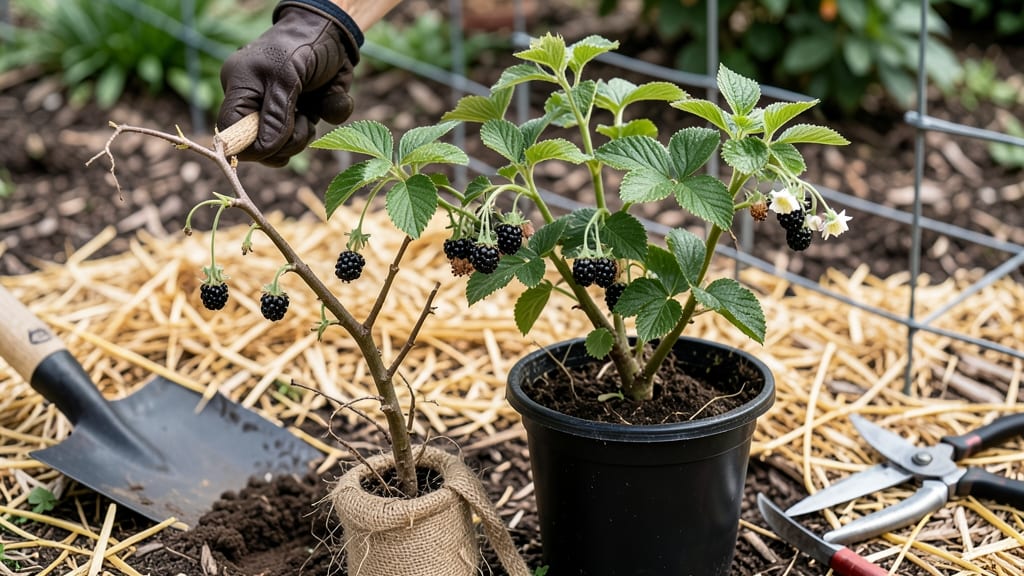
If you've ever wondered when to plant blackberries in Indiana, timing is everything—especially with our unpredictable spring frosts and hot summers. 🫐 Planting too early risks frost damage, while waiting too long can stunt your berries' growth before harvest season kicks in.
Indiana's 5b-6b climate zones mean you've got two prime windows: early spring (March-April) when soil temperatures hit 50°F, or early fall (September-October) before the first frost. Each approach has its advantages, and choosing the right one could mean the difference between a thriving bramble and a struggling plant.
I'll walk you through the exact steps for both planting methods—whether you're working with bare-root canes or potted plants—and how to prepare your soil for maximum success. We'll also cover which varieties thrive best in Indiana's conditions and how to protect your investment from common pitfalls.
Ready to grow your own blackberries? Let's dive into the perfect planting schedule tailored just for Indiana gardeners, so you can enjoy fresh, homegrown fruit from June through August.
Indiana blackberry planting timeline: frost-free dates by region
Indiana’s blackberry planting window hinges on last frost dates, soil temperatures, and whether you’re planting bare-root canes or potted plants. Northern Indiana’s colder microclimates (USDA Zone 5b) demand earlier planting, while Southern Indiana (Zone 6b) offers a slightly extended spring window.
Let’s break down the optimal planting months for each region to avoid frost damage and ensure robust root establishment.
For bare-root blackberries, the best time is early spring (March–early April) when soil temperatures reach 50°F (10°C).
This gives roots 6–8 weeks to establish before summer heat. Potted plants, however, can tolerate slightly cooler soil and can be planted 1–2 weeks later than bare-root varieties, provided frost risk has passed.
Fall planting (September–early October) is another viable option, especially for Southern Indiana, where first frost typically arrives in mid-October. Fall-planted canes focus on root growth rather than top growth, resulting in hardier plants the following spring. However, avoid planting too late—canes need 4–6 weeks to root before winter dormancy.
Here’s how Indiana’s regions compare for blackberry planting:
| Region | USDA Zone | Avg. Last Frost | Spring Planting Window | Fall Planting Window |
|---|---|---|---|---|
| Northern Indiana | 5b | April 20–May 5 | March 15–April 15 | September 1–September 15 |
| Central Indiana | 6a | April 10–April 25 | March 20–April 30 | September 10–October 1 |
| Southern Indiana | 6b | April 1–April 15 | March 25–May 10 | September 15–October 10 |
*Planting after these dates risks frost damage or poor root establishment.
If you’re planting bare-root blackberries, soak the roots in water for 1–2 hours before transplanting to rehydrate them. For potted plants, dig a hole twice as wide as the root ball to encourage outward root growth.
Amend the soil with compost or well-rotted manure to improve drainage and fertility—Indiana’s clay-heavy soils can suffocate roots if not amended.
Pro tip: Use black plastic mulch in early spring to warm the soil faster and extend your planting window by 1–2 weeks. This is especially useful in Northern Indiana, where cold soils delay planting. Just remove the mulch once soil temperatures stabilize above 50°F (10°C) to prevent overheating.
Timing isn’t just about frost dates—it’s also about soil temperature. Use a soil thermometer to confirm the ground is at least 50°F (10°C) before planting. Cold soil can stunt root growth, leaving your blackberries vulnerable to winter dieback.
In Central Indiana, this often aligns with mid-April, while Southern Indiana may be ready by late March.
Missed the spring window? Don’t panic—fall planting is your next best option, but act quickly. Canes planted in September should have 4–6 weeks to establish roots before first frost.
Mulch heavily with straw or leaves to insulate roots and prevent heaving during freeze-thaw cycles. In Northern Indiana, aim for early September to avoid winter stress.
Remember: Late spring plantings (after May 1) risk stunted growth and reduced yields, as canes won’t have enough time to harden off before winter. If you’re unsure about frost dates, consult your local Cooperative Extension office for hyperlocal advice.
They track microclimates that can vary even miles apart in Indiana.
🌱
Chill-hour requirements for blackberry varieties in Indiana’s climate zones
Indiana’s 5b-6b climate zones demand blackberry varieties that can handle 300-1,000 chill hours—the cold winter periods needed to trigger fruiting. Choosing the wrong variety risks poor yields or no berries at all.
For example, 'Triple Crown' thrives in Indiana with 500-700 chill hours, while 'Chester' needs 800-1,000 chill hours for optimal performance.
Not all blackberries are created equal—some are bred for cold-hardy survival in Indiana’s winters, while others struggle with our freeze-thaw cycles. The key is selecting varieties that match your specific microclimate, whether you’re in Northern Indiana’s Zone 5b or Southern Indiana’s Zone 6b.
🔍 Did You Know? Indiana’s chill-hour zones can vary even within a county due to elevation and lake effects. For instance, areas near Lake Michigan may experience 100-200 extra chill hours compared to inland regions.
Top Blackberry Varieties for Indiana
For Northern Indiana (Zone 5b), prioritize varieties like 'Triple Crown' or 'Natchez', which handle 500-700 chill hours and -15°F temperatures. These thrive even in late-spring frosts that can devastate less hardy plants.
In Southern Indiana (Zone 6b), where winters are milder, 'Chester' or 'Ouachita' shine with their 800+ chill hours and larger berry sizes. However, these may need winter mulch to prevent crown damage during occasional dips below 10°F.
Pro tip: If you’re unsure about your exact chill hours, check your local Cooperative Extension Service or use a chill-hour calculator based on your ZIP code. Planting the right variety saves you from years of disappointment—and who wants that? 🌱